Calorie deficit: how to calculate it.
To lose fat you need to eat a bit less than you burn. Here is how to work out how much, step by step with a worked example.
- Recommended deficit
- 300-500 kcal
- Weekly loss
- 0.5-1% of weight
- Protein
- 1.8-2.4 g/kg
What a calorie deficit is
Your body burns a certain amount of energy every day: your maintenance calories. If you eat less than that, it uses stored energy, mostly fat, to cover the gap. That gap is the calorie deficit.
Step 1: calculate your basal metabolic rate
Mifflin-St Jeor formula (weight in kg, height in cm, age in years).
- Men
- 10 × weight + 6.25 × height − 5 × age + 5
- Women
- 10 × weight + 6.25 × height − 5 × age − 161
Step 2: multiply by your activity level
- Sedentary
- × 1.2 · desk job, no exercise
- Light
- × 1.375 · exercise 1-3 days a week
- Moderate
- × 1.55 · exercise 3-5 days a week
- High
- × 1.725 · hard exercise 6-7 days
The result is your approximate maintenance calories. It is an estimate: adjust it based on how your weight changes over 2-3 weeks.
Step 3: subtract the deficit (example)
30-year-old man, 80 kg, 178 cm, trains 4 days a week.
- Basal metabolic rate
- 800 + 1,112.5 − 150 + 5 ≈ 1,768 kcal
- Maintenance
- 1,768 × 1.55 ≈ 2,740 kcal
- With a 400 kcal deficit
- ≈ 2,340 kcal per day
- Protein (2 g/kg)
- ≈ 160 g per day
How to lose fat without losing muscle
- Keep strength training: it is the signal that tells your body to keep its muscle.
- Eat 1.8-2.4 g of protein per kilogram of body weight.
- Do not cut too hard: lose 0.5-1% of your body weight per week.
- Weigh yourself several times a week and watch the weekly average, not a single day.
Frequently asked questions
How big should a calorie deficit be?
300-500 kcal a day is a good starting point for most people. Bigger deficits mean faster weight loss but more hunger, fatigue and risk of losing muscle.
Why am I not losing weight in a deficit?
Usually your real intake is higher than you think (oils, drinks, snacking) or water retention is hiding fat loss. Track everything for 2-3 weeks before adjusting.
Do I have to count calories forever?
No. Counting for a few weeks teaches you how much you really eat. After that, many people can keep a deficit with portions and habits.
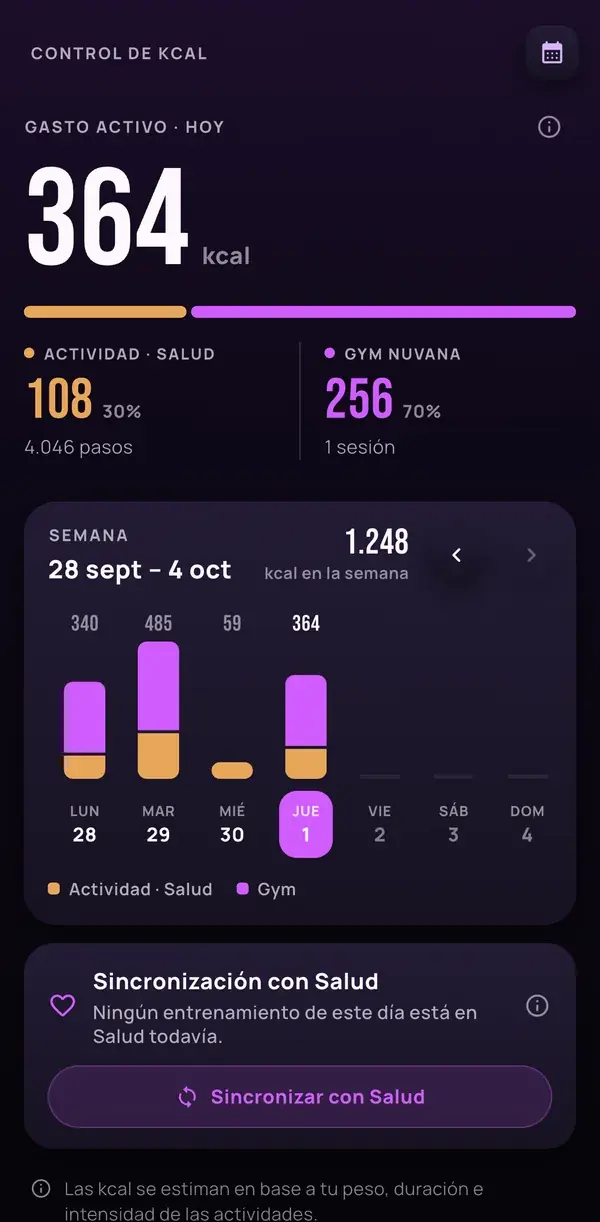
Track your calories with Nuvana.
Log what you eat, estimate a plate's calories with a photo and connect your nutrition with your daily activity.