Muscle soreness: what it is and how to relieve it.
Muscle soreness is the pain that shows up one or two days after training. It is normal, but it helps to know what causes it and what to do about it.
- Appear
- 12-24 h after
- Peak
- 24-72 h
- Gone in
- 3-5 days
Why soreness happens
They are not caused by lactic acid, which clears from the muscle in under an hour. Soreness comes from small micro-damage in muscle fibres and the inflammation that comes with repairing them, especially after new exercises, more volume than usual or a lot of eccentric work (lowering the weight).
What helps relieve it
There is no remedy that makes them disappear instantly: time is what helps most. Popular remedies like drinking sugar water have no scientific support.
- Gentle movement: walking, easy cycling or repeating the exercise with very little weight.
- Good sleep: that is when muscles repair the most.
- Massage or foam rolling: they can reduce the feeling of soreness for a while.
- Eating enough protein and calories to support recovery.
How to get less sore
- Increase volume gradually, especially when starting out or returning after a break.
- Train consistently: muscles adapt and soreness gets smaller each time (the repeated bout effect).
- Introduce new exercises with fewer sets during the first week.
Frequently asked questions
Can you train while sore?
Yes, if it is mild. You can train other muscle groups or the same one with less load. If it is intense and limits your movement, give that muscle another day off.
If I am not sore, was my workout bad?
No. Soreness does not tell you how much muscle you will build. With practice it is normal to get much less sore while still progressing.
When is it not just soreness?
If the pain is sharp, sits in a joint, appears suddenly during exercise, comes with major swelling or your urine turns dark, it is not normal soreness: see a healthcare professional.
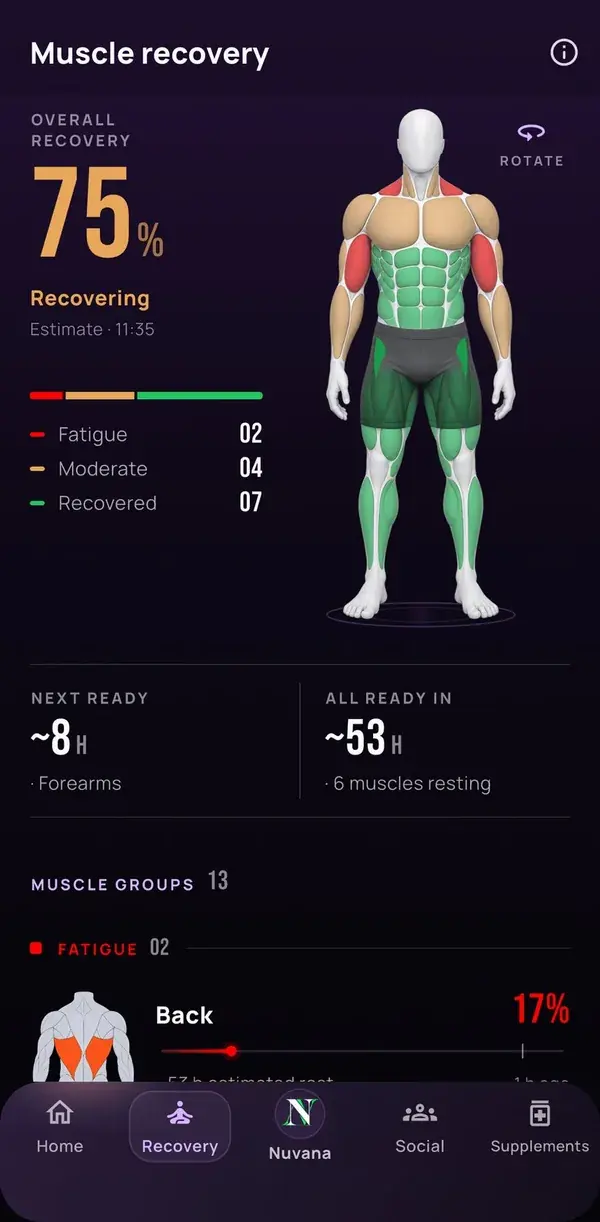
Track your recovery with Nuvana.
Nuvana shows each muscle group's recovery status based on what you have trained, so you know what to work on each day.