How much protein per day?
The amount depends on your weight and your goal. Here is how to calculate it, concrete examples and how to spread it through the day.
- If you strength train
- 1.6-2.2 g/kg
- Meals per day
- 3-5
- Per meal
- 20-40 g
Protein by goal
Grams of protein per kilogram of body weight per day.
- Sedentary adult
- 0.8-1 g/kg
- Regularly active
- 1.2-1.6 g/kg
- Build muscle
- 1.6-2.2 g/kg
- Lose fat, keep muscle
- 1.8-2.4 g/kg
These are guideline ranges for healthy adults. If you have kidney disease or another medical condition, check with a healthcare professional.
Examples by body weight
For someone who strength trains and wants to build muscle (1.6-2.2 g/kg).
- 60 kg
- 96-132 g per day
- 70 kg
- 112-154 g per day
- 80 kg
- 128-176 g per day
- 90 kg
- 144-198 g per day
How to spread it through the day
Spreading protein across 3-5 meals with 20-40 g each is easier to stick to and makes better use of muscle protein synthesis than packing it into one meal.
- Breakfast: Greek yogurt or skyr with oats, or eggs on toast.
- Lunch and dinner: a palm-sized or larger portion of meat, fish, tofu or legumes.
- After training: if you will not eat soon, a protein shake is a practical option.
High-protein foods
Approximate protein per serving.
- Chicken breast (150 g)
- ≈ 35 g
- Canned tuna (1 can, 80 g drained)
- ≈ 20 g
- Eggs (3 large)
- ≈ 19 g
- Greek yogurt or skyr (200 g)
- ≈ 18-22 g
- Cooked lentils (200 g)
- ≈ 18 g
- Firm tofu (150 g)
- ≈ 20 g
- Whey protein (1 scoop, 30 g)
- ≈ 22-25 g
Frequently asked questions
Is too much protein bad for you?
In healthy people, intakes up to about 2.5 g/kg have not shown negative effects in studies. Going beyond what you need brings no extra muscle benefit.
Do I need protein shakes?
No. They are just a convenient way to reach your daily target. If you get enough from food, you do not need them.
Should I use my current or target weight?
If you have a lot of body fat to lose, it is more practical to use your target weight so you do not overestimate it.
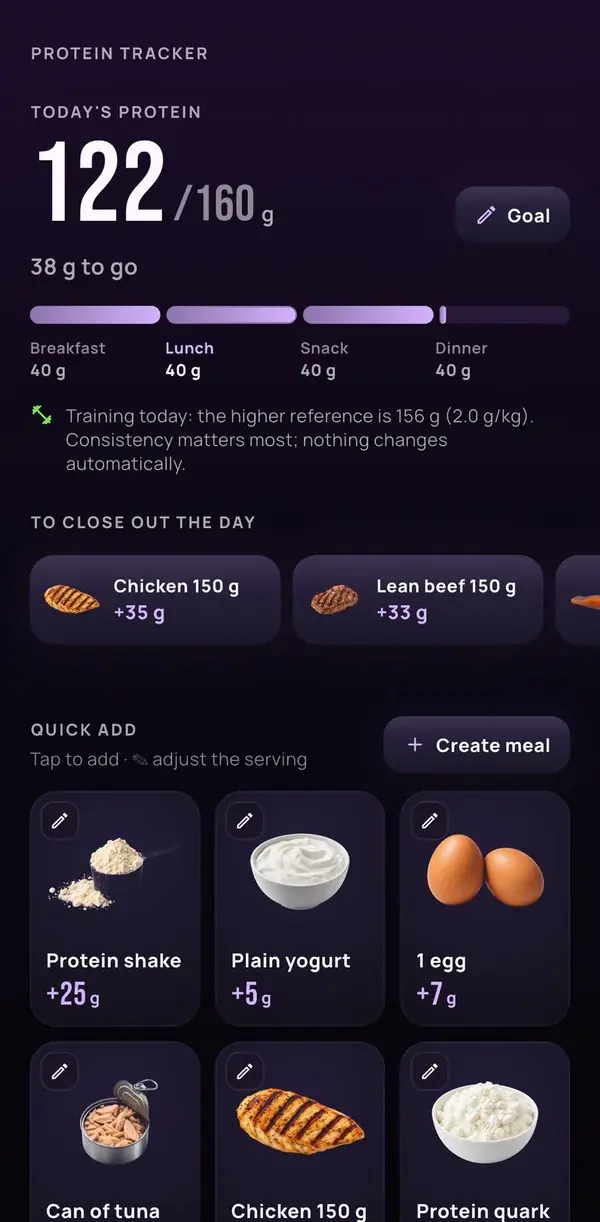
Track your protein with Nuvana.
Log your meals, snap a photo of your plate to estimate calories and protein, and see whether you hit your target every day.