Bench Press
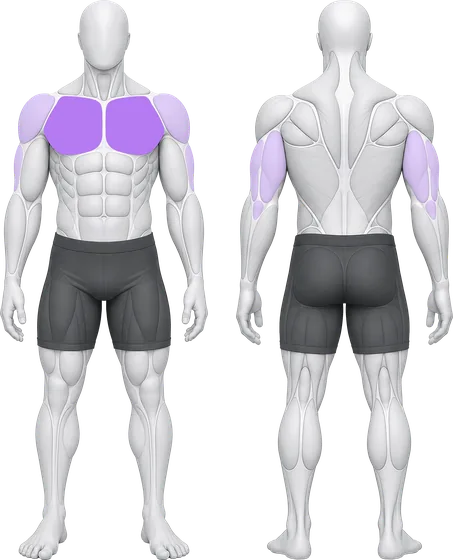
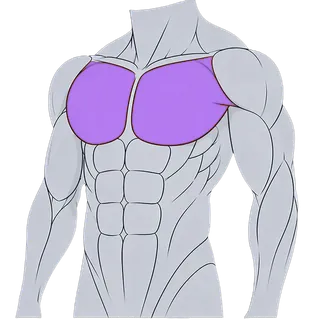
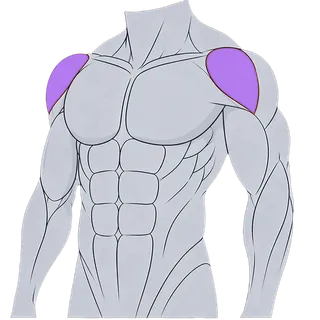
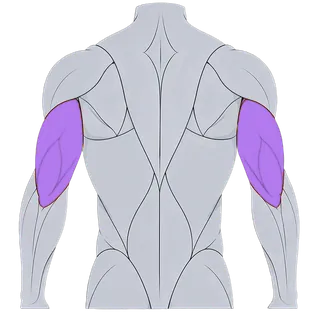
The classic upper-body lift: it moves more weight than any other press and builds your chest, front delts and triceps at once.
Also known as: barbell bench press, flat bench press, bench
- Level
- Intermediate
- Equipment
- Barbell
- Type
- Compound
How to do it
- Lie down with your eyes under the bar, feet planted, and pull your shoulder blades back and down.
- Grip the bar slightly wider than shoulder width, wrists stacked over your elbows.
- Unrack the bar and hold it over your shoulders with straight arms.
- Lower it under control to your lower chest, elbows roughly 45-70 degrees from your torso.
- Press up and slightly back to the start without losing your upper-back arch.
Form cues
- Keep your shoulder blades pinned to the bench for the whole set, even at the top.
- Drive your feet into the floor: leg drive stabilises you and adds power.
- Forearms vertical from the front and side at the bottom.
Common mistakes
- Flaring your elbows to 90 degrees: it loads the shoulder joint and tends to hurt. Tuck them in a little.
- Bouncing the bar off your chest: momentum does half the work. Touch and press without losing control.
- Lifting your hips off the bench to move more weight: it changes the angle and the rep doesn't count. Keep them down.
- Lowering the bar toward your neck: it stresses the shoulder. Touch your lower chest, around the sternum.
Sets and reps
For strength, 3-5 sets of 3-6 reps with 2-4 minutes of rest. For muscle growth, 3-4 sets of 6-12 reps leaving 1-3 in reserve. Train it 1-3 times a week.
Variations
Same movement, different equipment. Pick based on what you have and what you want from the bench press.
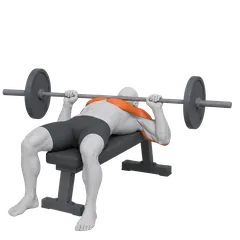
Paused bench press
A 1-2 second pause on the chest removes the bounce and builds strength off the bottom.
How to do it
- Lie on a flat bench and grip the barbell slightly wider than shoulder-width.
- Unrack the bar and lower it to your chest.
- Pause on your chest for 1-2 seconds.
- Press the bar back up until your arms are fully extended.
- Control the descent on every rep.
- Primary
- Chest
- Secondary
- Front Delts, Triceps
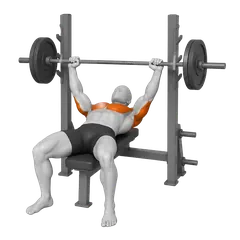
Wide-grip bench press
Shortens the range and shifts work to the chest, at the cost of more shoulder stress.
How to do it
- Lie on a flat bench. Grip the barbell wider than shoulder-width.
- Lower the bar to mid-chest.
- Press back up to full extension.
- Primary
- Chest
- Secondary
- Front Delts, Triceps
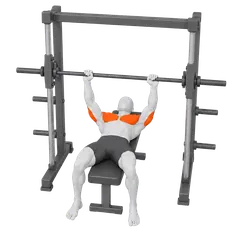
Smith machine bench press
The fixed path lets you train close to failure without a spotter.
How to do it
- Lie on a flat bench set inside a Smith machine.
- Grip the bar slightly wider than shoulder-width and unrack it.
- Lower the bar under control to your mid-chest.
- Pause briefly without bouncing.
- Press the bar back up until your arms are fully extended.
- Primary
- Chest
- Secondary
- Front Delts, Triceps
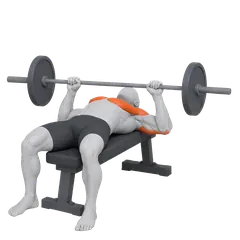
Spoto press
You stop the bar an inch above your chest: total control at the bottom.
How to do it
- Lie on a flat bench and grip the barbell slightly wider than shoulders.
- Unrack the bar and hold it over your chest with arms extended.
- Lower the bar until it is one inch above your chest.
- Pause there for a full second without touching the chest.
- Press the bar back up until your arms are extended.
- Primary
- Chest
- Secondary
- Front Delts, Triceps
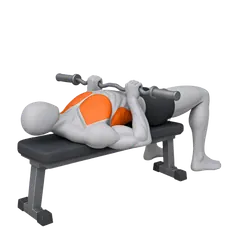
EZ-bar bench press
The semi-neutral grip is often easier on sensitive wrists and shoulders.
How to do it
- Lie flat on a bench with your feet planted on the floor, gripping the EZ bar's angled bends over your chest.
- Unrack the bar and hold it over your lower chest with your arms extended.
- Lower the bar under control toward your lower chest.
- Press the bar back up to full arm extension.
- Primary
- Chest
- Secondary
- Front Delts, Triceps
FAQ
Where should the bar touch on the bench press?
On your lower chest, around the sternum. Lowering it to your neck loads the shoulder; lowering it to your stomach costs leverage.
Should you arch your back when benching?
A moderate upper-back arch is normal: it protects the shoulder and shortens the range. What matters is that your glutes and head stay on the bench.
Barbell or dumbbell bench press?
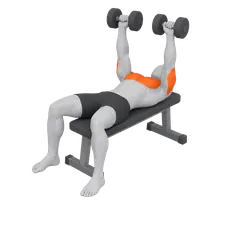
The barbell lets you lift more and track strength easily; dumbbells give more range and work each side on its own. Both fit in the same program.
What muscles do the bench press work?
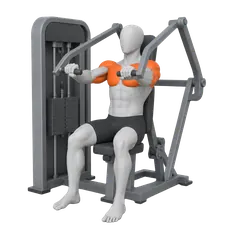
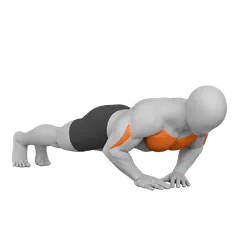
They mainly work the chest, with help from the front delts and the triceps.
Add the bench press to your next workout
Log your sets and weights, and see how each muscle progresses in the app.