Dumbbell Curl
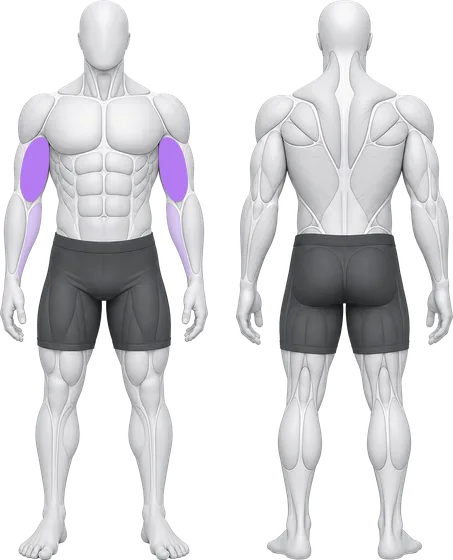
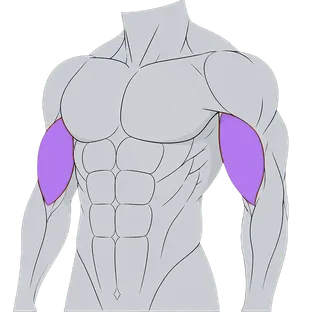
The most basic and effective biceps exercise: each arm works alone and you can rotate your wrist to use the whole muscle.
Also known as: biceps curl, dumbbell biceps curl, alternating curl
- Level
- Beginner
- Equipment
- Dumbbell
- Type
- Isolation
How to do it
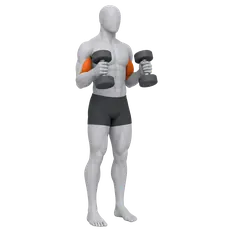
- Stand holding a dumbbell in each hand, arms straight by your sides.
- Keeping your elbows at your sides, curl the dumbbells up while turning your palms to face up.
- Squeeze your biceps at the top without letting your elbows drift forward.
- Lower slowly until your arms are fully straight.
Form cues
- Your elbows act as a fixed hinge.
- Turn your palm up as you lift to work the biceps harder.
- Straighten your arm completely at the bottom.
Common mistakes
- Swinging your body to lift: your back helps and your biceps do less.
- Bringing your elbows forward at the top: the shoulder takes over.
- Half reps at the top: the biceps also grow in the stretched position.
Sets and reps
3-4 sets of 8-15 reps with 60-90 seconds of rest. For biceps, 6-12 weekly sets are usually enough if you also do pull-ups and rows.
Variations
Same movement, different equipment. Pick based on what you have and what you want from the dumbbell curl.
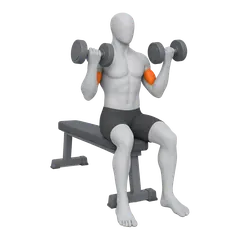
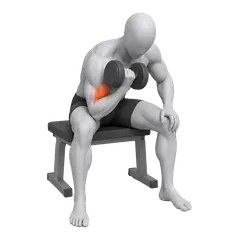
Seated dumbbell curl
Sitting makes it harder to cheat with your body.
How to do it
- Sit on a bench with a dumbbell in each hand.
- Let your arms hang at your sides with palms facing forward.
- Curl both dumbbells toward your shoulders by flexing your biceps.
- Squeeze at the top of the movement.
- Lower the dumbbells with control.
- Primary
- Biceps
- Secondary
- Brachialis, Brachioradialis
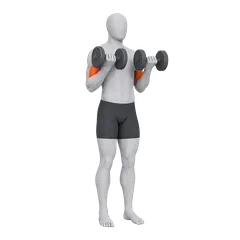
Strict curl
Back against a wall: zero momentum.
How to do it
- Stand tall with a dumbbell in each hand, arms at your sides and palms facing forward.
- Pin your elbows against your sides and brace your core so your torso cannot swing.
- Curl both dumbbells up by bending only at the elbows.
- Lower them under control until your arms are straight.
- Primary
- Biceps
- Secondary
- Brachialis, Forearm Flexors
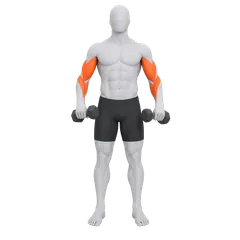
Zottman curl
Curl up palms up, lower palms down: biceps and forearms.
How to do it
- Stand with your feet about hip-width apart, arms extended at your sides, and a dumbbell in each hand with the palms facing forward.
- Keep your upper arms beside your ribs and curl both dumbbells toward your shoulders without swinging the torso.
- At the top, keep the elbows bent and rotate the forearms until the palms face down.
- Lower the dumbbells slowly with the pronated grip until the arms are straight.
- Turn the palms forward again at the bottom and repeat for the desired number of repetitions.
- Primary
- Biceps
- Secondary
- Brachialis, Brachioradialis, Forearm Extensors
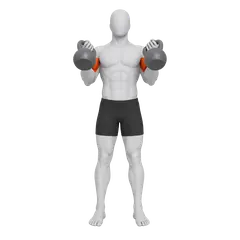
Double kettlebell curl
The weight hangs differently and changes the tension.
How to do it
- Stand holding a kettlebell in each hand by the handle, palms facing forward.
- Keep the elbows tucked to the sides and the bells hanging at arm length.
- Curl both kettlebells up toward the shoulders by flexing the elbows.
- Squeeze the biceps at the top, then lower under control to the starting position.
- Primary
- Biceps
- Secondary
- Brachialis, Forearm Flexors
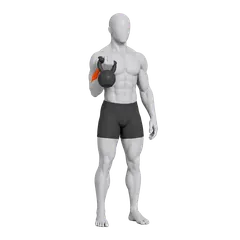
Single-arm kettlebell curl
One arm at a time with a kettlebell.
How to do it
- Stand tall holding a kettlebell in one hand.
- Keep your elbow pinned to your side.
- Curl the kettlebell toward your shoulder by flexing your bicep.
- Squeeze at the top of the movement.
- Lower the kettlebell with control.
- Complete reps on one side, then switch.
- Primary
- Biceps
- Secondary
- Brachialis, Forearm Flexors
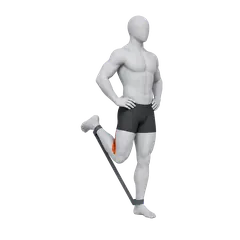
Band curl
Great at home, with more tension at the top.
How to do it
- Loop a resistance band around one ankle and anchor the other end under your standing foot or a fixed point in front of you.
- Stand tall, holding onto something for balance if needed, with a slight bend in the standing knee.
- Curl the banded heel up and back toward your glute, keeping the thigh still.
- Squeeze the hamstring at the top, then lower under control to a full stretch.
- Complete all reps on one side, then switch legs.
- Primary
- Hamstrings
- Secondary
- Calves
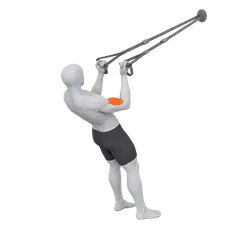
Suspension trainer curl
Using your bodyweight; your angle sets the difficulty.
How to do it
- Adjust the suspension trainer straps to a medium length.
- Stand facing the anchor point, grasp the handles with an underhand grip, and lean back until your arms are fully extended.
- Keep your body straight and core engaged, pull your chest towards your hands by bending your elbows.
- Squeeze your biceps at the top of the movement.
- Slowly extend your arms back to the starting position, controlling the descent.
- Maintain tension throughout the set.
- Primary
- Biceps
- Secondary
- Brachialis, Brachioradialis
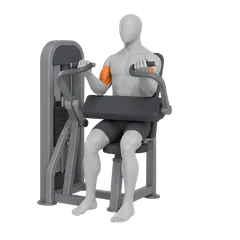
Machine curl
Arm supported on a fixed path.
How to do it
- Sit in the machine and adjust the pad to your arm length.
- Grip the handles with an underhand grip.
- Curl the handles toward your shoulders.
- Lower with control.
- Primary
- Biceps
- Secondary
- Brachialis
FAQ
Alternating or both arms at once?
Both work. Alternating lets you focus on each arm; together saves time.
How heavy should curls be?
One you can curl for 8-15 reps without swinging, leaving 1-2 in reserve.
How often should I train biceps?
Two or three times a week, spreading the volume, works better than one huge session.
What muscles do the dumbbell curl work?
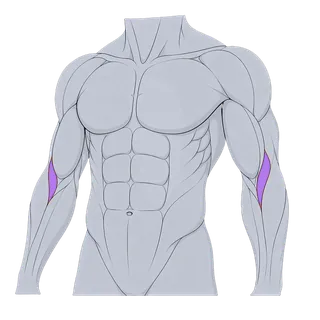
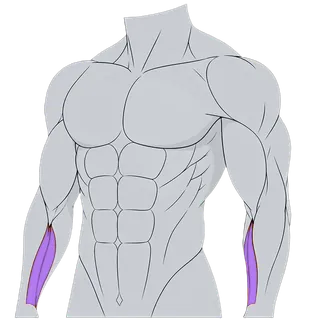
They mainly work the biceps, with help from the brachialis and the forearm flexors.
Add the dumbbell curl to your next workout
Log your sets and weights, and see how each muscle progresses in the app.