Squat
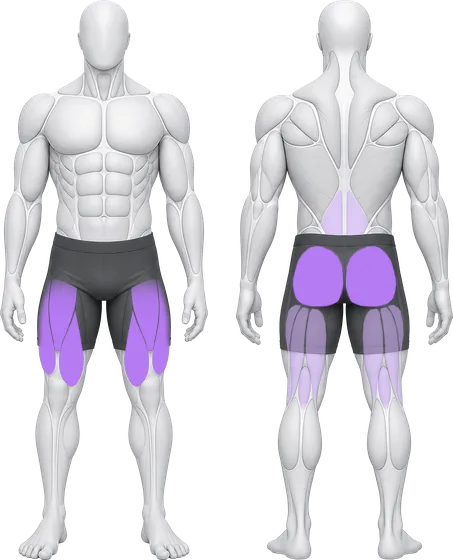
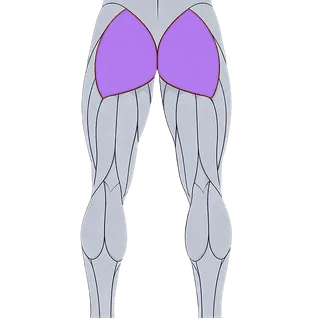
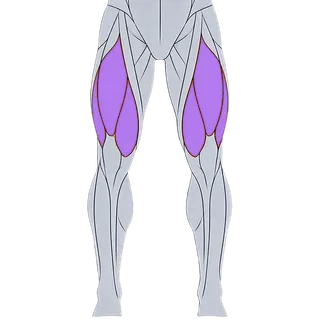
The foundation of lower-body training: quads, glutes and adductors working together under heavy load.
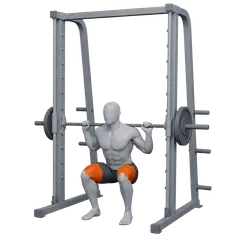
Also known as: back squat, barbell squat, high-bar squat
- Level
- Intermediate
- Equipment
- Barbell
- Type
- Compound
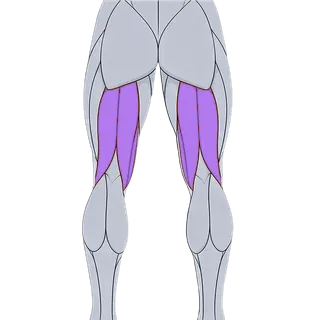
How to do it
- Set the bar across your upper back, not your neck, and unrack it.
- Feet slightly wider than your hips, toes turned out a little.
- Breathe in, brace and sit down and back, knees tracking over your toes.
- Descend until your hip crease is level with or below your knees.
- Drive up through your whole foot until you're standing tall.
Form cues
- Knees track in line with your toes.
- Whole foot planted: heel, big toe and little toe.
- Chest up and spine neutral the whole way.
Common mistakes
- Knees caving in on the way up: actively push them out.
- Heels lifting: your weight shifts forward. Spread it across your whole foot.
- Cutting depth because the weight is too heavy: drop the load and go deeper.
- Rounding your lower back at the bottom: only go as deep as you can stay neutral.
Sets and reps
For strength, 3-5 sets of 3-6 reps with 3 minutes of rest. For muscle, 3-4 sets of 6-12. Once to three times a week.
Variations
Same movement, different equipment. Pick based on what you have and what you want from the squat.
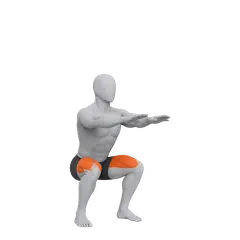
Bodyweight squat
To learn the movement or warm up.
How to do it
- Stand with feet shoulder-width apart and arms extended forward.
- Sit back and down by bending your hips and knees.
- Lower until your thighs are parallel to the floor.
- Drive through your heels to return to standing.
- Primary
- Glutes, Quads
- Secondary
- Lower Back, Glute Medius, Hamstrings
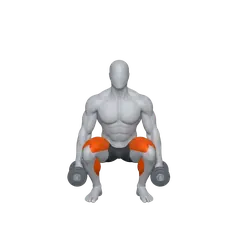
Dumbbell squat
Dumbbells at your sides: easy to do at home.
How to do it
- Stand with feet shoulder-width, a dumbbell in each hand at the sides.
- Brace the core and keep the chest up.
- Squat down by hinging at the hips and bending the knees.
- Descend until the thighs are parallel or below.
- Drive through the heels to stand back up.
- Primary
- Glutes, Quads
- Secondary
- Hamstrings
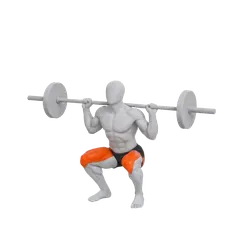
Pause squat
A 2-second pause at the bottom builds strength where it's hardest.
How to do it
- Unrack a barbell and rest it across your upper back.
- Stand with feet shoulder-width apart.
- Squat down until your thighs are parallel to the floor.
- Hold the bottom position for 2-3 seconds.
- Drive through your heels to stand back up.
- Primary
- Glutes, Quads
- Secondary
- Lower Back, Glute Medius, Hamstrings
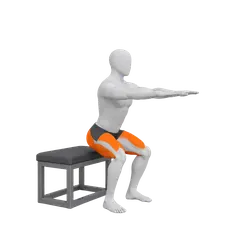
Box squat
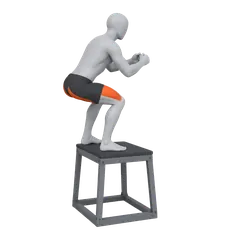
You sit back onto a box, which controls your depth.
How to do it
- Stand in front of a box or bench, feet shoulder-width apart, with your arms extended forward for balance.
- Push your hips back and bend your knees, sitting back toward the box rather than straight down.
- Touch the box lightly with your glutes without collapsing onto it.
- Drive through your feet to stand back up, squeezing your glutes at the top.
- Primary
- Glutes, Quads
- Secondary
- Lower Back, Glute Medius, Hamstrings
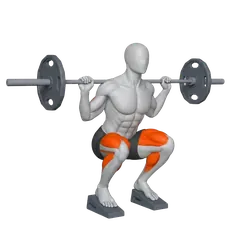
Heel-elevated squat
Heels on a plate: more quads and easier depth.
How to do it
- Place weight plates or a wedge under your heels, feet shoulder-width apart.
- Hold a barbell across your upper back or hold dumbbells at your sides.
- Brace your core and descend into a squat, keeping your torso upright.
- Squat until thighs are parallel to the floor or lower.
- Drive through your feet to return to the starting position.
- Primary
- Glutes, Quads
- Secondary
- Adductors, Lower Back, Hamstrings
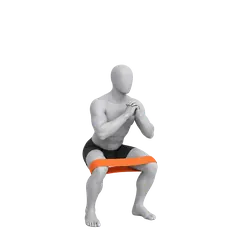
Banded squat
The band adds resistance, mostly at the top.
How to do it
- Place a loop band just above the knees.
- Stand with feet shoulder-width apart, toes slightly out.
- Push the knees out against the band as you squat down.
- Descend until thighs are parallel or below.
- Drive through the heels to stand back up.
- Primary
- Glutes, Quads
- Secondary
- Glute Medius, Hamstrings
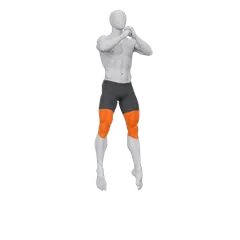
Jump squat
An explosive squat to build power.
How to do it
- Stand with feet shoulder-width apart.
- Drop into a quarter-squat with the arms back.
- Explode upward, swinging the arms up and jumping as high as you can.
- Land softly back into a quarter-squat to absorb impact.
- Primary
- Glutes, Quads
- Secondary
- Calves, Hamstrings
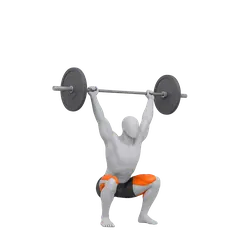
Overhead squat
Bar held overhead: demands lots of mobility and stability.
How to do it
- Hold a barbell overhead with a wide snatch grip and arms locked out.
- Stand with feet slightly wider than shoulder-width.
- Squat down by pushing your hips back and bending your knees.
- Keep the bar directly over the middle of your feet.
- Drive through your heels to stand back up.
- Primary
- Glutes, Quads
- Secondary
- Lower Back, Side Delts, Traps
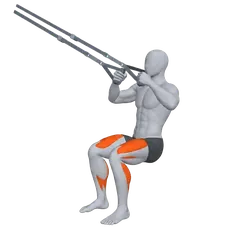
Suspension trainer squat
The straps help with balance and posture.
How to do it
- Stand facing the anchor point, holding the handles with palms facing each other, arms extended.
- Lean back slightly, keeping your body straight and core engaged, with feet shoulder-width apart.
- Initiate the squat by pushing your hips back and bending your knees, lowering your body as if sitting in a chair.
- Descend until your thighs are parallel to the floor or as deep as comfortable, maintaining tension on the straps.
- Drive through your heels to return to the starting position, extending your hips and knees fully.
- Primary
- Glutes, Quads
- Secondary
- Hamstrings
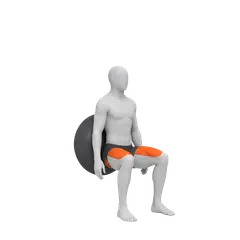
Stability ball wall squat
A ball between your back and the wall guides the movement.
How to do it
- Place a stability ball between your lower back and a wall.
- Step the feet forward about a foot, slightly wider than shoulder-width.
- Squat down, letting the ball roll up the back as you descend.
- Stop when thighs are parallel to the floor.
- Drive through the heels to stand back up.
- Primary
- Glutes, Quads
- Secondary
- Hamstrings
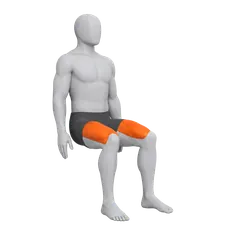
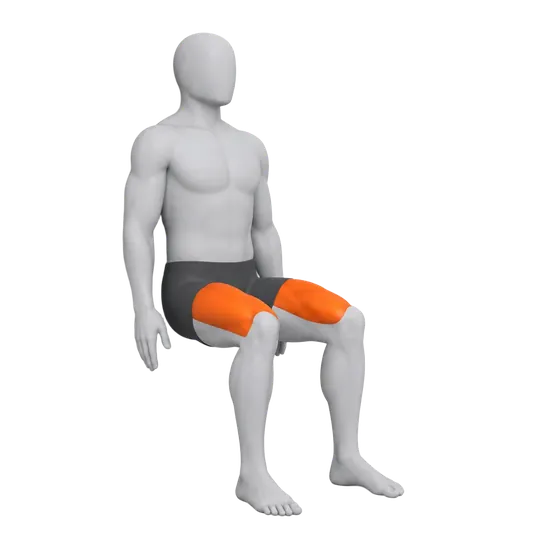
Wall sit
Hold a seated position against the wall.
How to do it
- Stand with back against a wall.
- Slide down until thighs are parallel to the floor.
- Hold the position.
- Stand back up when done.
- Primary
- Glutes, Quads
- Secondary
- Hamstrings
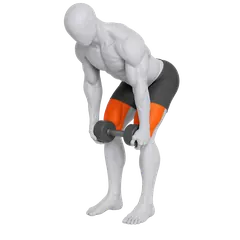
Dumbbell somersault squat
A dynamic dumbbell variation for athletic work.
How to do it
- Stand with feet shoulder-width holding a dumbbell in one hand at the shoulder.
- Squat down while reaching the dumbbell forward and across the body.
- Reach the bottom of the squat with the dumbbell extended past the opposite knee.
- Drive through the heels to stand up, returning the dumbbell to the shoulder.
- Complete reps per side, then switch.
- Primary
- Glutes, Quads
- Secondary
- Hamstrings, Obliques
FAQ
How deep should you squat?
Until your hips are level with or below your knees, as long as your back stays neutral. More depth usually means more glute work.
Can your knees go past your toes?
Yes, it's normal and necessary for many people. What matters is that they track over your toes and your heels stay down.
What muscles does the squat work?
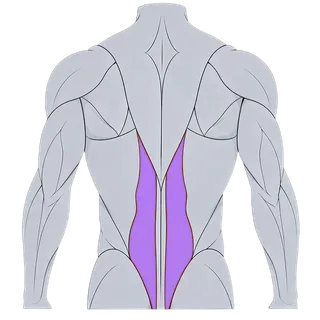
Mainly quads, glutes and adductors, with hamstrings, lower back and core stabilising.
What muscles do the squat work?
They mainly work the glutes and the quads, with help from the lower back and the hamstrings.
Add the squat to your next workout
Log your sets and weights, and see how each muscle progresses in the app.