Deadlift
Lifting a bar from the floor until you stand tall. The lift that moves the most weight and trains your whole posterior chain.
Also known as: conventional deadlift, barbell deadlift
- Level
- Intermediate
- Equipment
- Barbell
- Type
- Compound
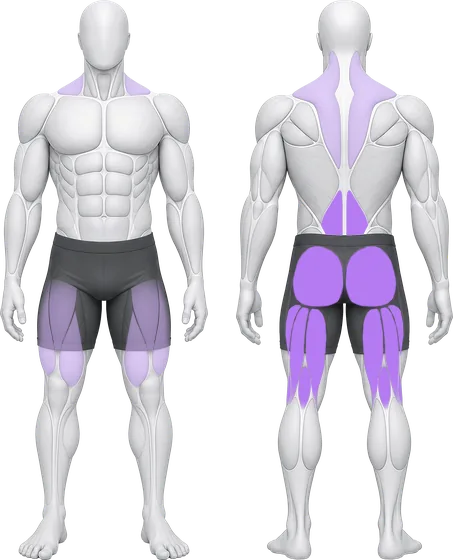
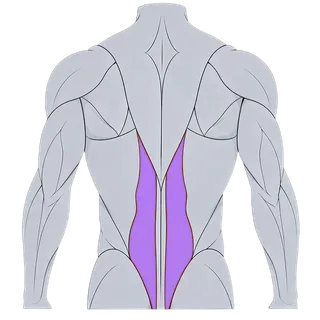
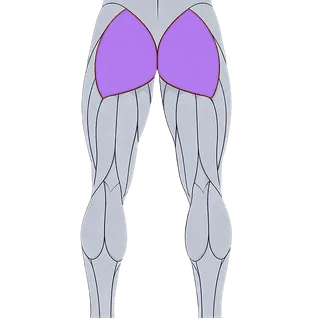
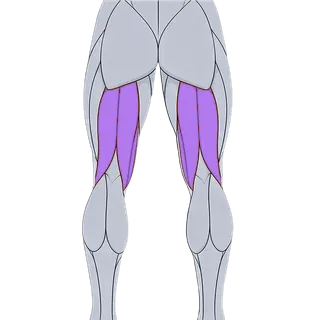
How to do it
- Stand with your feet hip-width apart and the bar over your mid-foot.
- Hinge down and grip the bar just outside your legs with straight arms.
- Lift your chest, brace your back and set your shoulders slightly in front of the bar.
- Push the floor away and extend your hips, keeping the bar against your legs, until you're standing tall.
- Lower the bar by pushing your hips back first, bending your knees once it passes them.
Form cues
- Take a breath and brace your abs before every rep.
- The bar travels in a straight line, close to your body.
- Finish standing tall with your glutes squeezed, without leaning back.
Common mistakes
- Rounding your lower back: the load shifts onto your spine. Drop the weight until you can keep it neutral.
- Letting the bar drift away from your legs: it lengthens the lever and loads your lower back.
- Shooting your hips up before your chest: it turns into a heavy stiff-legged pull. Rise together.
- Leaning back at the top: it arches your lower back for no reason. Finish upright.
Sets and reps
For strength, 3-5 sets of 3-5 reps with 3-5 minutes of rest. For muscle, 3-4 sets of 5-8. One or two sessions a week is enough; it's very demanding.
Variations
Same movement, different equipment. Pick based on what you have and what you want from the deadlift.
Deficit deadlift
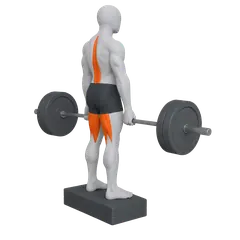
Standing on a plate to lengthen the range and build strength off the floor.
How to do it
- Stand on a small platform with a loaded barbell over your midfoot.
- Hinge down and grip the bar just outside your knees.
- Drive through your legs to stand up while keeping the bar close.
- Lock out your hips and knees at the top.
- Lower under control and repeat.
- Primary
- Lower Back, Glutes, Hamstrings
- Secondary
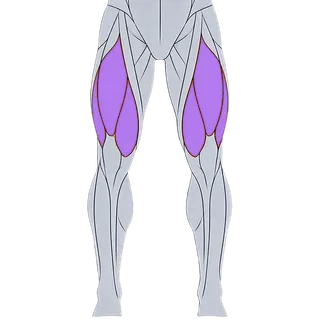
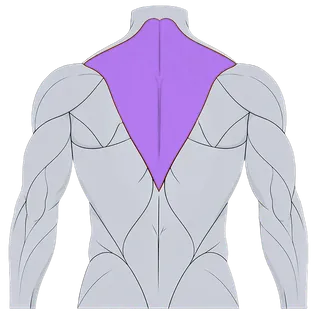
- Lats, Quads, Traps
Paused deadlift
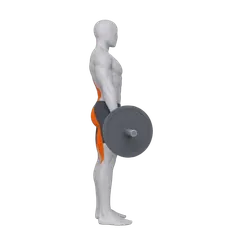
A pause partway up to reinforce your position at the sticking point.
How to do it
- Set up for a conventional deadlift.
- Pull the bar off the floor and pause when it passes your knees.
- Hold for 2–3 seconds, then complete the lift.
- Lower under control.
- Primary
- Lower Back, Glutes, Hamstrings
- Secondary
- Quads, Traps
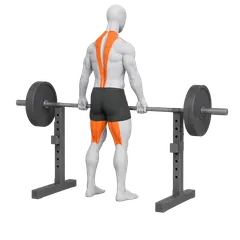
Rack pull
Pulling from pins at knee height: heavier loads and focus on the lockout.
How to do it
- Set the safety pins in a power rack at knee height and place a loaded barbell on them.
- Stand with feet hip-width apart and grip the bar just outside your legs.
- Brace your core, retract your shoulder blades, and drive through your legs to lift the bar.
- Lock out your hips and knees fully at the top.
- Return the bar to the pins under control and reset before the next rep.
- Primary
- Lower Back, Glutes, Hamstrings, Traps
- Secondary
- Forearm Flexors, Forearms, Lats
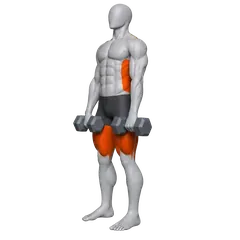
Dumbbell deadlift
Same technique with dumbbells, great for learning or training at home.
How to do it
- Stand with dumbbells in front of your thighs, feet hip-width apart.
- Hinge at the hips and lower the dumbbells along your legs with a flat back.
- Keep the dumbbells close to your shins throughout the descent.
- Drive through your heels to return to standing.
- Extend your hips fully at the top without hyperextending your lower back.
- Primary
- Lower Back, Glutes, Hamstrings
- Secondary
- Lats, Quads, Traps
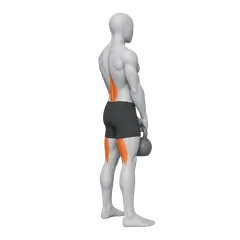
Kettlebell deadlift
Kettlebell between your feet: the best way to learn the hip hinge.
How to do it
- Stand with feet shoulder-width apart and kettlebell between your feet.
- Hinge at the hips and bend your knees to grip the handle.
- Brace your core and set your back flat.
- Drive through your heels to stand up with the kettlebell.
- Lock out at the top with shoulders pulled back.
- Lower the kettlebell back to the floor with control.
- Primary
- Lower Back, Glutes, Hamstrings
- Secondary
- Forearm Flexors, Quads
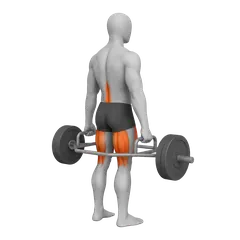
FAQ
What muscles does the deadlift work?
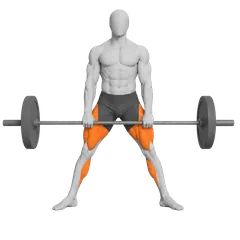
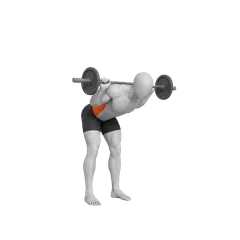
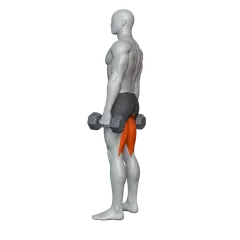
Mainly glutes, hamstrings, quads and spinal erectors, with lots of help from lats, traps and forearms to hold the bar.
Is the deadlift bad for your back?
Not with good form and sensible loads. It actually strengthens the back; the risk comes from rounding under heavy weight.
Mixed grip or double overhand?
Double overhand while you can hold it; for heavy sets, mixed or hook grip. With mixed grip, alternate which hand is flipped.
What muscles do the deadlift work?
They mainly work the lower back, the glutes and the hamstrings, with help from the quads and the traps.
Add the deadlift to your next workout
Log your sets and weights, and see how each muscle progresses in the app.