Dumbbell Shoulder Press
An overhead press with a dumbbell in each hand: more range than a barbell and each shoulder working on its own.
Also known as: DB shoulder press, dumbbell overhead press, seated dumbbell press
- Level
- Intermediate
- Equipment
- Dumbbell
- Type
- Compound
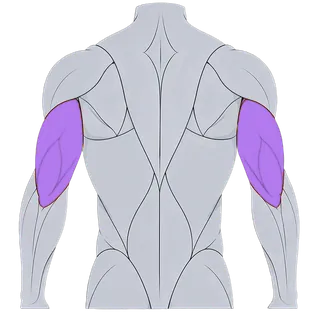
How to do it
- Sit on an upright bench and bring the dumbbells to shoulder height.
- Palms forward, elbows slightly in front of your body.
- Press up until the dumbbells nearly meet overhead.
- Lower under control to around ear level or slightly below.
Form cues
- Elbows slightly forward, not flared straight out.
- Back against the pad, no arching.
- No need to clank the dumbbells at the top.
Common mistakes
- Arching your back to push more: lighten the load.
- Barely lowering: bring the dumbbells to at least ear level.
- Flaring your elbows 90 degrees: it irritates the shoulder. Bring them slightly forward.
Sets and reps
3-4 sets of 8-12 reps with 90 seconds of rest.
Variations
Same movement, different equipment. Pick based on what you have and what you want from the dumbbell shoulder press.
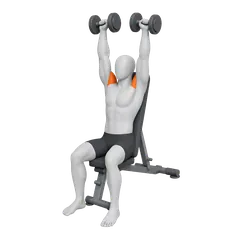
Seated dumbbell press
On a flat bench: your core works harder.
How to do it
- Sit on a bench with back support, holding dumbbells at shoulder height.
- Press the dumbbells overhead until arms are fully extended.
- Lower the dumbbells back to shoulder level.
- Primary
- Front Delts, Side Delts
- Secondary
- Traps, Triceps
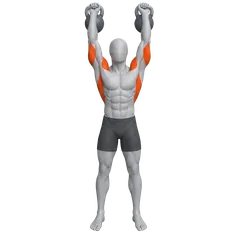
Double kettlebell press
The weight behind your forearm demands more stability.
How to do it
- Clean two kettlebells to the rack position at your shoulders.
- Stand tall with feet hip-width apart.
- Press both kettlebells straight overhead.
- Lock out your arms at the top.
- Lower back to the rack position and repeat.
- Primary
- Front Delts, Triceps
- Secondary
- Abs, Serratus, Traps
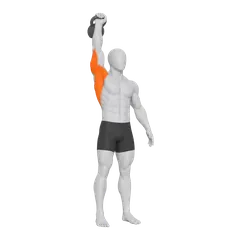
Single-arm kettlebell press
One side at a time; your core stops you leaning.
How to do it
- Hold a kettlebell in the racked position at one shoulder.
- Stand tall with feet hip-width apart.
- Press the kettlebell straight overhead until your arm is locked out.
- Keep your core tight throughout.
- Lower the kettlebell back to the rack position with control.
- Complete reps on one side, then switch.
- Primary
- Front Delts, Side Delts
- Secondary
- Obliques, Traps, Triceps
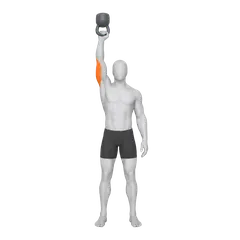
Bottoms-up kettlebell press
The upside-down bell forces a very steady grip and shoulder.
How to do it
- Clean a light kettlebell to the rack position, then tilt it so the bell points up and the handle is at the palm.
- Grip the handle hard; wrist absolutely straight and vertical.
- Brace the core and press the bell straight up without letting it tip.
- Lock out overhead with the bell still perfectly upright.
- Lower slowly back to the rack position keeping the bell vertical the entire descent.
- Complete all reps on one side, then switch.
- Primary
- Front Delts
- Secondary
- Forearm Flexors, Side Delts, Serratus, Triceps
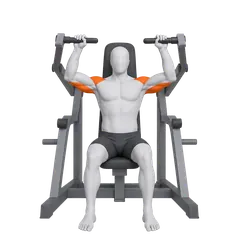
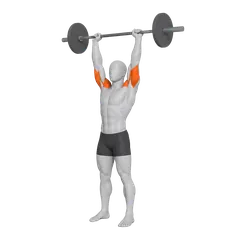
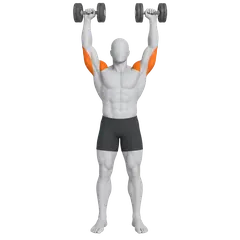
FAQ
Dumbbells or barbell for shoulders?
Dumbbells free up the shoulder and fix side-to-side gaps; the barbell allows more weight. Use whichever feels better, or both.
Seated or standing?
Seated with back support is more stable and isolates the shoulders; standing works your core.
How low should the dumbbells go?
To ear level or slightly below, as long as your shoulders feel fine.
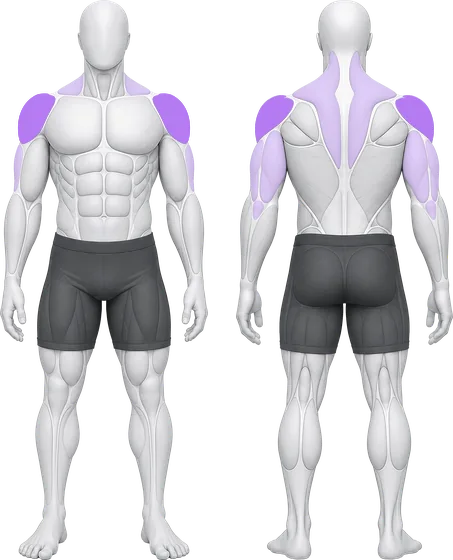
What muscles do the dumbbell shoulder press work?
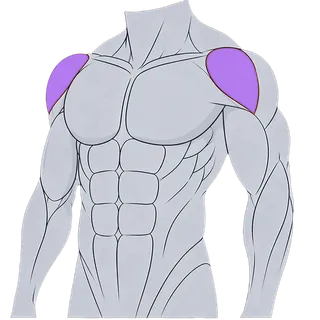
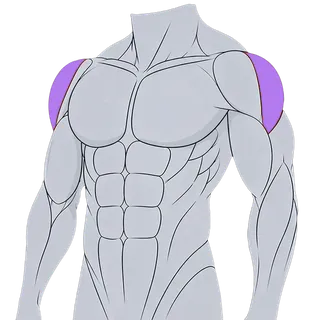
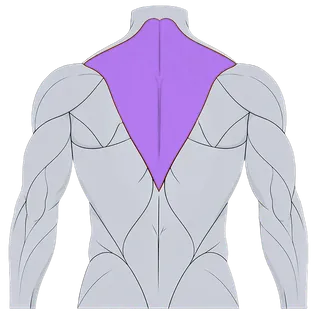
They mainly work the front delts and the side delts, with help from the traps and the triceps.
Add the dumbbell shoulder press to your next workout
Log your sets and weights, and see how each muscle progresses in the app.