Overhead Press
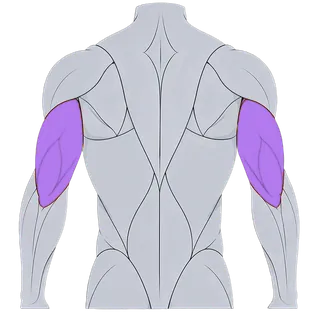
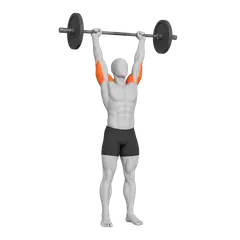
Pressing a bar from your shoulders to overhead: the classic strength lift for shoulders and triceps.
Also known as: OHP, military press, standing barbell press
- Level
- Intermediate
- Equipment
- Barbell
- Type
- Compound
How to do it
- Unrack the bar at shoulder height with your hands slightly wider than your shoulders.
- Feet hip-width apart, glutes and abs braced.
- Press the bar straight up, moving your head back slightly to let it pass.
- At the top, bring your head through under the bar with locked arms, then lower to your shoulders.
Form cues
- Forearms vertical at the start.
- The bar travels in a straight line close to your face.
- Don't arch your lower back; squeeze your glutes.
Common mistakes
- Leaning back hard to press: it becomes an incline press and loads your lower back.
- Pressing forward instead of straight up: you lose strength and balance.
- Accidentally driving with your legs: that's a push press. In a strict press your knees stay locked.
Sets and reps
3-5 sets of 4-8 reps with 2-3 minutes of rest for strength, or 3-4 sets of 8-12 for muscle.
Variations
Same movement, different equipment. Pick based on what you have and what you want from the overhead press.
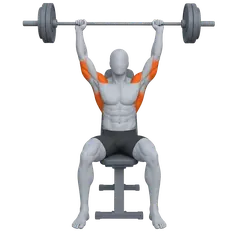
Seated barbell press
An upright backrest: less core demand, more stability.
How to do it
- Set an upright bench inside a rack with the pins at about shoulder height when seated.
- Sit with your back flat against the pad and unrack the barbell at the front of the shoulders.
- Press the bar overhead until the arms are fully extended, tucking the head through at the top.
- Lower the bar back to the collarbones under control.
- Primary
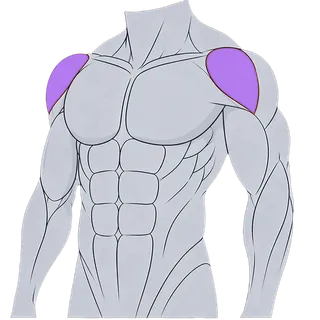
- Front Delts
- Secondary
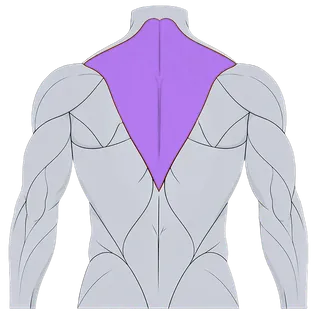
- Side Delts, Traps, Triceps
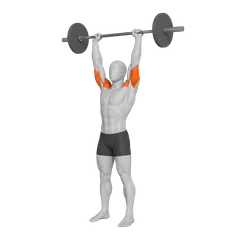
Paused overhead press
A pause at the shoulders removes the bounce.
How to do it
- Set up with a barbell racked at shoulder height, feet shoulder-width apart, and the core braced.
- Press the bar straight overhead until the elbows are fully locked out.
- Lower the bar under control back down to the front of the shoulders.
- Hold a full one-second pause at the shoulders, keeping tension and eliminating any bounce.
- Press back up from the dead stop without using leg drive.
- Primary
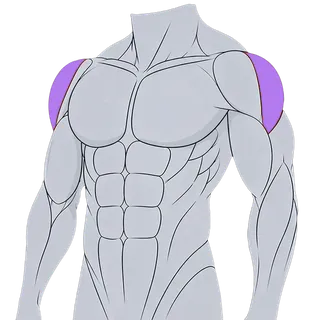
- Front Delts, Side Delts
- Secondary
- Traps, Triceps
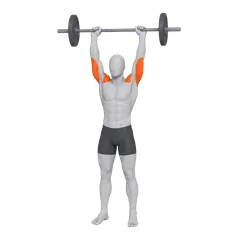
Behind-the-neck press
Requires lots of mobility; only if your shoulders are comfortable.
How to do it
- Sit or stand with a barbell resting on your upper traps behind your neck.
- Grip the bar wider than shoulder width.
- Press the bar straight up overhead until your arms are extended.
- Lower the bar back to the starting position under control.
- Primary
- Front Delts, Side Delts
- Secondary
- Traps, Triceps
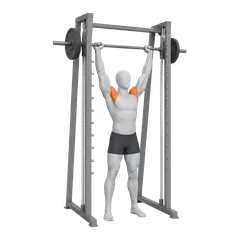
Smith machine overhead press
The guided bar takes balance out of the equation.
How to do it
- Sit on a bench positioned inside a Smith machine.
- Grip the bar slightly wider than shoulder-width at shoulder level.
- Unrack the bar and press it overhead until your arms are extended.
- Lower the bar back to shoulder level under control.
- Keep your core tight throughout.
- Primary
- Front Delts, Side Delts
- Secondary
- Traps, Triceps
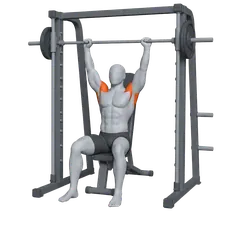
Seated Smith machine press
The most stable version for pressing near failure.
How to do it
- Position a bench inside a Smith machine.
- Sit facing forward with the bar at shoulder height.
- Grip the bar slightly wider than shoulder-width.
- Unrack and press the bar straight up until your arms are extended.
- Lower the bar back to shoulder height with control.
- Primary
- Front Delts, Side Delts
- Secondary
- Traps, Triceps
FAQ
Standing or seated overhead press?
Standing also trains your core and transfers better; seated isolates the shoulders and allows slightly more weight. Both are useful.
What muscles does the overhead press work?
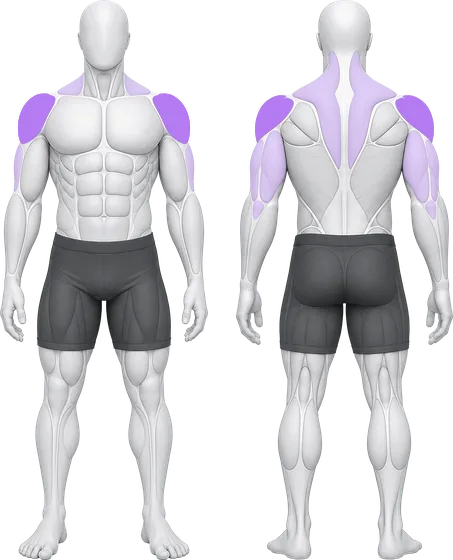
Mainly the front and side delts and triceps, with traps and core stabilising.
How low should the bar go?
To your upper chest or chin, with forearms vertical.
What muscles do the overhead press work?
They mainly work the front delts and the side delts, with help from the traps and the triceps.
Add the overhead press to your next workout
Log your sets and weights, and see how each muscle progresses in the app.