Farmer's Walk
Walking with heavy weights in each hand: grip, traps, core and stability with one of the simplest, most effective exercises.
Also known as: farmer's carry, farmers walk
- Level
- Intermediate
- Equipment
- Kettlebell
- Type
- Compound
How to do it
- Pick up a heavy kettlebell in each hand, arms straight at your sides.
- Stand tall with your shoulders back and abs braced.
- Walk with short, controlled steps without swaying.
- When you finish, set the weights down by bending your legs.
Form cues
- Chest up, shoulders down.
- Squeeze the handles hard.
- Short, quick steps.
Common mistakes
- Hunching forward: walk tall.
- Letting the weights bang your legs: hold them slightly away.
- Dropping the weights: lower them with your legs.
Sets and reps
3-5 walks of 20-40 metres or 30-60 seconds, with 60-90 seconds of rest.
Variations
Same movement, different equipment. Pick based on what you have and what you want from the farmer's walk.
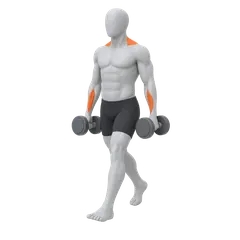
Dumbbell farmer's walk
The same idea with heavy dumbbells.
How to do it
- Stand tall with a dumbbell in each hand, arms extended at your sides.
- Retract your shoulder blades and brace your core, maintaining a neutral spine.
- Walk slowly and deliberately for a set distance or duration, taking short, controlled steps.
- Keep your chest up and avoid leaning to one side as you walk.
- Focus on maintaining a strong, stable posture throughout the movement.
- Primary
- Forearm Flexors, Traps
- Secondary
- Glutes, Obliques, Quads, Abs
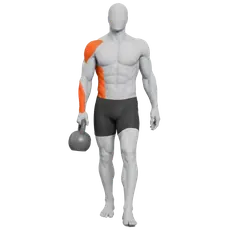
Suitcase carry
Weight in one hand only: your core works to keep you upright.
How to do it
- Stand beside a single kettlebell or dumbbell with your feet under your hips.
- Hinge at the hips, take the handle in one hand and stand up with the weight hanging at your side.
- Pull that shoulder down and back, and brace as if you were about to be pushed sideways.
- Walk forward with normal, even strides, keeping your torso upright and square rather than leaning away from the weight.
- Keep the free arm relaxed at your side instead of sticking it out as a counterweight.
- Carry for the desired distance or time, set the weight down under control, then repeat on the other side.
- Primary
- Forearm Flexors, Obliques, Quadratus Lumborum
- Secondary
- Lower Back, Glute Medius, Quads, Traps
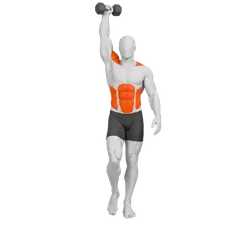
Single dumbbell overhead carry
One dumbbell held overhead: shoulder stability.
How to do it
- Clean or press a dumbbell to a locked-out position directly above your shoulder.
- Push the arm all the way up so the elbow is straight and the biceps is close to your ear.
- Brace your ribs down rather than letting your lower back arch to hold the weight up.
- Walk forward with controlled strides, keeping the dumbbell stacked over your shoulder and hip.
- Keep your eyes forward — tipping your head back to watch the weight drags your posture with it.
- Carry for the desired distance, lower under control, then repeat with the other arm.
- Primary
- Front Delts, Side Delts
- Secondary
- Obliques, Quadratus Lumborum, Serratus, Deep Core, Traps, Triceps
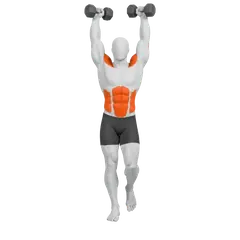
Double dumbbell overhead carry
Two dumbbells overhead: lots of core and shoulder.
How to do it
- Clean or press a dumbbell to lockout above each shoulder.
- Straighten both elbows fully and pull your shoulder blades up into the weights rather than shrugging away from them.
- Brace hard and keep your ribs down — with both arms overhead the temptation to arch is much stronger.
- Walk forward with short, deliberate strides, keeping both dumbbells stacked over your shoulders.
- Keep breathing shallowly and steadily instead of holding your breath for the whole carry.
- Carry for the desired distance, then lower both weights under control.
- Primary
- Front Delts, Side Delts
- Secondary
- Lower Back, Serratus, Deep Core, Traps, Triceps
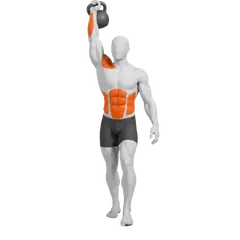
Kettlebell overhead carry
One kettlebell overhead while you walk.
How to do it
- Clean and press a kettlebell to lockout, letting the bell settle on the back of your forearm.
- Straighten the elbow fully and turn the arm so the bell sits behind and above your wrist rather than off to the side.
- Pack the shoulder — push the weight up and let the shoulder blade travel with it instead of jamming it down.
- Brace your trunk and walk forward with even strides, keeping the bell stacked over your shoulder and hip.
- Keep your wrist straight; letting it bend back is what makes an overhead bell feel unstable.
- Carry for the desired distance, lower under control, then repeat on the other side.
- Primary
- Front Delts, Side Delts
- Secondary
- Forearm Extensors, Obliques, Quadratus Lumborum, Serratus, Traps, Triceps
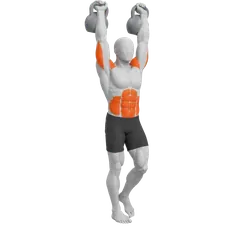
Double kettlebell overhead carry
Two kettlebells overhead: very demanding.
How to do it
- Clean two kettlebells to the rack, then press or push press both to lockout overhead.
- Straighten both elbows and settle each bell behind and above its wrist, with your wrists straight.
- Pull your ribs down and brace hard before the first step; with both bells overhead there is nothing to counterbalance with.
- Walk forward with short, controlled strides, keeping both bells stacked over your shoulders.
- Keep looking straight ahead and breathe steadily through the carry.
- Cover the desired distance, then lower both bells to the rack and down under control.
- Primary
- Front Delts, Side Delts
- Secondary
- Lower Back, Forearm Extensors, Serratus, Deep Core, Traps, Triceps
FAQ
What is the farmer's walk good for?
It builds grip, traps, core and posture, with great carryover to daily life.
How heavy should I go?
As a guide, start with half your bodyweight split between both hands.
Distance or time?
Either works; what matters is holding good posture to the end.
What muscles do the farmer's walk work?
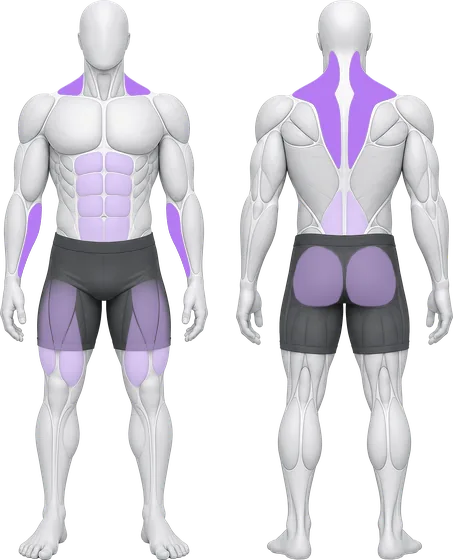
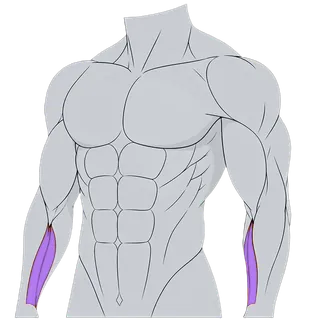
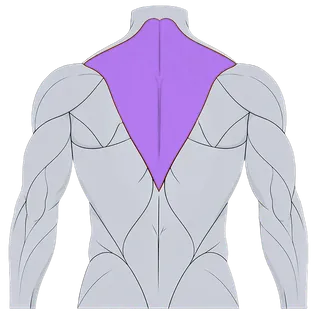
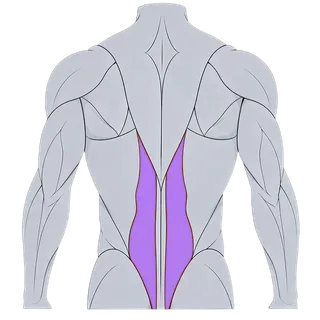
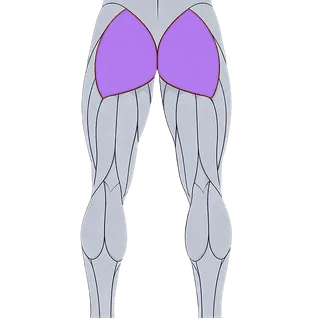
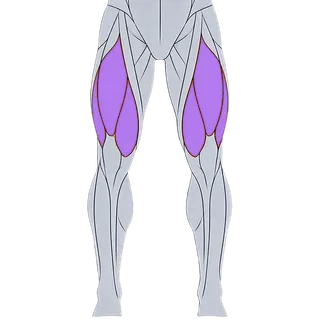
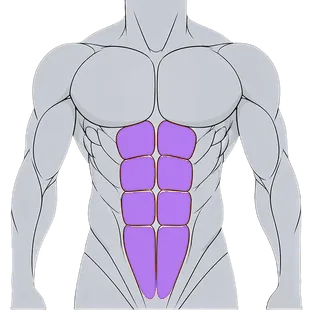
They mainly work the forearm flexors and the traps, with help from the lower back, the glutes, the quads and the abs.
Add the farmer's walk to your next workout
Log your sets and weights, and see how each muscle progresses in the app.