Floor Press
A bench press done on the floor: the range ends when your elbows touch down, great for lockout strength and cranky shoulders.
Also known as: barbell floor press, DB floor press
- Level
- Intermediate
- Equipment
- Barbell
- Type
- Compound
How to do it
- Lie on the floor under the bar with your knees bent or legs straight.
- Grip the bar slightly wider than shoulder width and pull your shoulder blades together.
- Lower the bar until the backs of your upper arms touch the floor, elbows about 45 degrees out.
- Pause briefly without relaxing, then press to lockout.
Form cues
- Let your elbows touch down softly: the floor marks the end, it isn't a bounce.
- With dumbbells or kettlebells, start with your forearms vertical.
- Set the bar in low safety pins or have a partner hand it to you.
Common mistakes
- Slamming your elbows into the floor: you lose tension and can get hurt. Lower them under control.
- Flaring your arms out: your elbows land in a bad spot for the shoulder. Keep them about 45 degrees.
- Arching hard to press: you don't need it on the floor. Keep your lower back relaxed.
Sets and reps
3-4 sets of 5-10 reps with 2-3 minutes of rest. Useful as a bench press accessory or as your main press when deep pressing bothers your shoulder.
Variations
Same movement, different equipment. Pick based on what you have and what you want from the floor press.
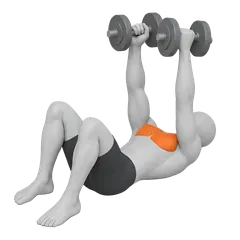
Dumbbell floor press
You can do it at home without a bench or rack.
How to do it
- Lie on the floor with a dumbbell in each hand at chest level.
- Press the dumbbells upward until arms are extended.
- Lower under control until elbows touch the floor.
- Primary
- Chest
- Secondary
- Front Delts, Triceps
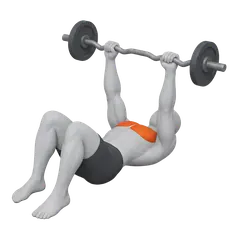
EZ-bar floor press
A more comfortable grip for your wrists.
How to do it
- Lie on the floor holding an EZ-bar over your chest.
- Lower the bar until your elbows touch the floor.
- Press back up to full extension.
- Primary
- Chest
- Secondary
- Front Delts, Triceps
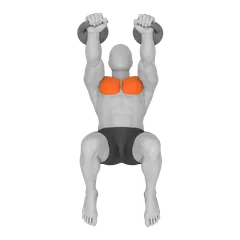
Kettlebell floor press
The weight sits behind your hand, demanding more stability.
How to do it
- Lie on your back on the floor with knees bent, feet flat.
- Hold a kettlebell in each hand at the chest, bells resting on the outer forearms.
- Press both kettlebells straight up until the arms are fully extended.
- Lower under control until the triceps touch the floor — do not bounce.
- Primary
- Chest
- Secondary
- Front Delts, Triceps
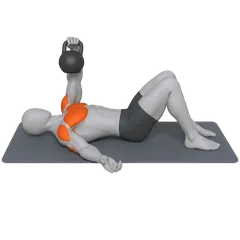
Single-arm kettlebell floor press
One arm at a time: your core works to stop you twisting.
How to do it
- Lie flat on the floor with knees bent.
- Hold a kettlebell at your shoulder with one hand.
- Press the kettlebell straight up until your arm is fully extended.
- Lower the kettlebell until your upper arm touches the floor.
- Keep your core braced throughout.
- Complete reps on one side, then switch.
- Primary
- Chest
- Secondary
- Front Delts, Triceps
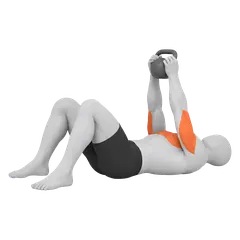
Close-grip kettlebell floor press
One kettlebell held with both hands: more triceps.
How to do it
- Lie on your back on the floor with the knees bent and feet flat.
- Hold a single kettlebell by the handle with both hands, close together, the bell resting on the chest with elbows tucked tight to the ribs.
- Brace the core and press the kettlebell straight up until the arms are fully extended.
- Lower under control until the upper arms touch the floor and pause briefly.
- Press back up to lockout.
- Primary
- Triceps
- Secondary
- Front Delts, Chest
FAQ
What is the floor press good for?
It strengthens the top half of the press, especially the triceps, and limits shoulder range. It's also a way to press at home without a bench.
Does it work the chest?
Yes, though the shorter range stretches the chest less than a bench press and the triceps do more.
Legs straight or bent?
Both are fine. Straight legs remove any help from your hips.
What muscles do the floor press work?
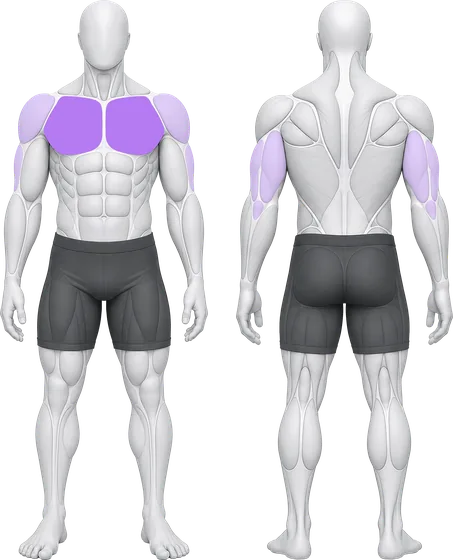
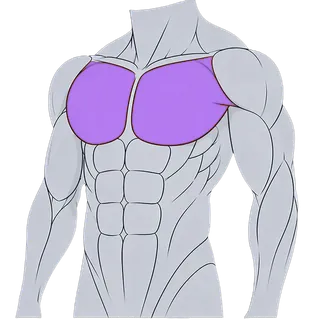
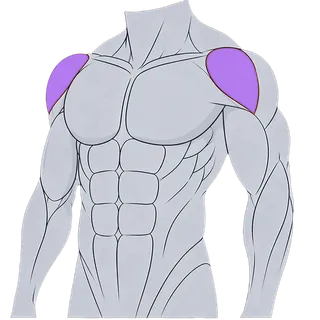
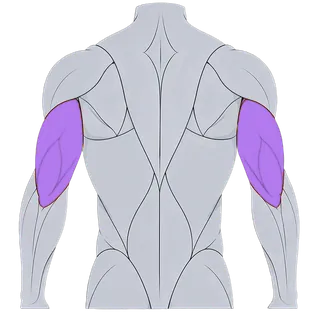
They mainly work the chest, with help from the front delts and the triceps.
Add the floor press to your next workout
Log your sets and weights, and see how each muscle progresses in the app.