Pull-Up
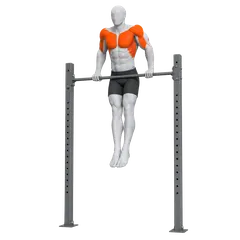
Hang from a bar and pull until your chin clears it: the most complete bodyweight back exercise there is.
Also known as: pull-ups, overhand pull-up
- Level
- Intermediate
- Equipment
- Pull-Up Bar
- Type
- Compound
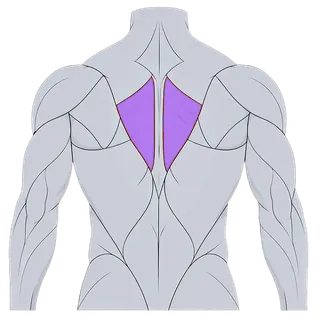
How to do it
- Hang from the bar with palms facing away, slightly wider than shoulder width.
- Pull your shoulders down and back before you start pulling.
- Drive your elbows toward your ribs until your chin clears the bar.
- Lower under control to full arm extension and repeat.
Form cues
- Think about driving your elbows into your back pockets, not lifting your chin.
- Keep your legs still, together and slightly in front.
- Every rep starts from straight arms.
Common mistakes
- Half reps without straightening your arms: your back works far less.
- Kicking your legs to get up: momentum replaces strength.
- Craning your neck to reach the bar: your chin clears because your body rises, not the other way around.
Sets and reps
3-4 sets close to failure, between 4 and 12 reps. Past 12, add weight; under 3, combine negatives and assisted versions.
Variations
Same movement, different equipment. Pick based on what you have and what you want from pull-ups.
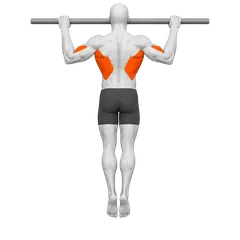
Wide-grip pull-ups
More lats and less biceps, with a shorter range.
How to do it
- Grip the pull-up bar with an overhand grip wider than shoulder-width.
- Hang with arms fully extended and core braced.
- Pull your chest toward the bar by driving your elbows down.
- Keep your shoulders pulled back as you rise.
- Lower yourself under control to full extension.
- Primary
- Lats
- Secondary
- Biceps, Rear Delts, Rhomboids, Traps
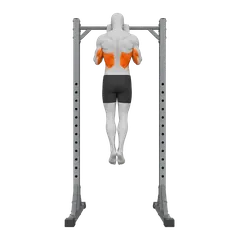
Close-grip pull-ups
Hands close together: more range and more arm work.
How to do it
- Hang from a pull-up bar with hands shoulder-width or narrower, palms away.
- Pull yourself up until chin clears the bar.
- Lower under control.
- Primary
- Biceps, Lats
- Secondary
- Rhomboids
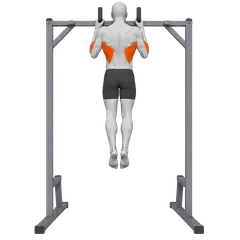
Neutral-grip pull-ups
Palms facing each other: the most comfortable on shoulders and elbows.
How to do it
- Grip parallel bars with palms facing each other.
- Hang with your arms fully extended.
- Pull yourself up until your chin clears the bar.
- Squeeze your lats at the top of the movement.
- Lower yourself with control to the starting position.
- Primary
- Lats
- Secondary
- Biceps, Brachialis, Forearm Flexors, Rhomboids
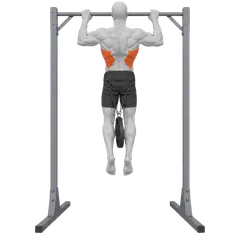
Weighted pull-ups
With a belt or vest to keep building strength.
How to do it
- Attach a plate to a dip belt around your waist so the weight hangs between your legs, or hold the load between your feet.
- Grip the pull-up bar with an overhand grip slightly wider than shoulder-width and hang at full arm extension with your legs together.
- Pull your elbows down and back to drive your chest toward the bar until your chin clears it.
- Lower yourself under control back to the full dead hang, keeping tension on your lats and letting the weight settle before the next rep.
- Primary
- Lats
- Secondary
- Biceps, Rear Delts, Rhomboids, Traps
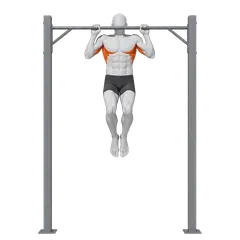
Paused pull-ups
A pause at the top to own the end range.
How to do it
- Hang from a pull-up bar with an overhand grip, arms fully extended.
- Pull yourself up until your chin clears the bar.
- Pause and hold that top position for a moment.
- Lower yourself back down under control to a full hang.
- Primary
- Lats
- Secondary
- Biceps, Rear Delts, Rhomboids, Traps
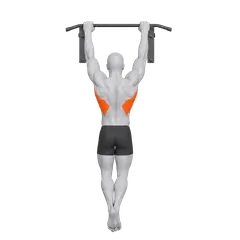
Negative pull-ups
Jump to the top and lower over 3-5 seconds: the best way to earn your first rep.
How to do it
- Use a box or jump to position yourself at the top of a pull-up.
- Grip the bar with hands shoulder-width apart.
- Hold your chin above the bar briefly.
- Lower yourself slowly over 3-5 seconds with control.
- Fully extend your arms at the bottom.
- Reset and repeat for the desired number of reps.
- Primary
- Lats
- Secondary
- Biceps, Forearm Flexors, Rear Delts, Rhomboids
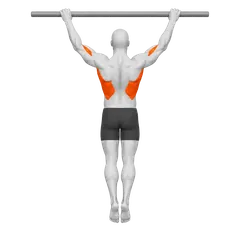
Scapular pull-ups
Only your shoulder blades move: teaches you to start the pull properly.
How to do it
- Hang from a pull-up bar with arms fully extended.
- Keep your arms straight throughout the movement.
- Depress and retract your shoulder blades to lift your chest.
- Pause briefly at the top of the movement.
- Return to a fully hanging position.
- Primary
- Lats, Traps
- Secondary
- Forearm Flexors, Rhomboids
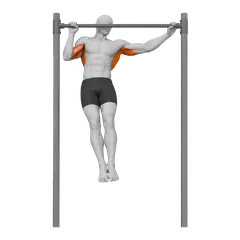
Archer pull-ups
One arm does most of the work: the path to a one-arm pull-up.
How to do it
- Grip the bar wider than shoulder width with palms facing away.
- Pull yourself up while shifting your body toward one hand.
- Keep the opposite arm straight as a support.
- Lower yourself under control back to the hang.
- Alternate sides each rep or complete reps on one side first.
- Primary
- Lats
- Secondary
- Biceps, Forearm Flexors, Rear Delts, Rhomboids
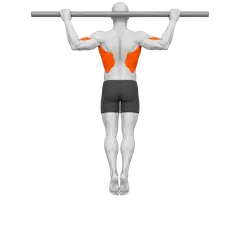
Behind-the-neck pull-ups
Requires a lot of shoulder mobility and isn't needed to progress.
How to do it
- Grip the pull-up bar with an overhand grip wider than shoulder-width and hang at full arm extension with your legs together.
- Keep your torso vertical rather than leaning back, and pull your elbows down and out to the sides.
- Continue pulling until the bar passes behind your head and the back of your neck comes level with it, without letting the bar touch your neck.
- Lower yourself under control back to a full dead hang, keeping your head still rather than letting it snap forward.
- Primary
- Lats
- Secondary
- Biceps, Rear Delts, Rhomboids, Traps
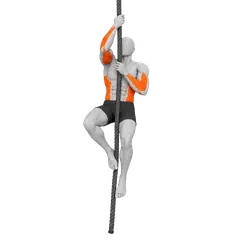
Rope climb
A grip-heavy pull that hammers back, arms and forearms.
How to do it
- Grip the rope as high as you can with both hands.
- Either wrap the rope around one foot (S-hook or J-hook) or pinch it between both feet.
- Pull yourself up while the feet squeeze to support body weight and release rope.
- Reach higher with one hand, then the other, and re-clamp with the feet.
- Descend hand-under-hand with the feet controlling the speed — never slide.
- Primary
- Lats
- Secondary
- Biceps, Forearm Flexors, Abs
FAQ
How do I get my first pull-up?
Combine slow negatives, band or machine-assisted pull-ups and inverted rows. With 2-3 sessions a week it usually comes within weeks.
What's the difference between pull-ups and chin-ups?
Pull-ups use a palms-away grip and stress the lats more; chin-ups face your palms toward you and use more biceps.
How many pull-ups is good?
For most people, 8-12 strict reps is a solid level. More than 15 is advanced.
What muscles do pull-ups work?
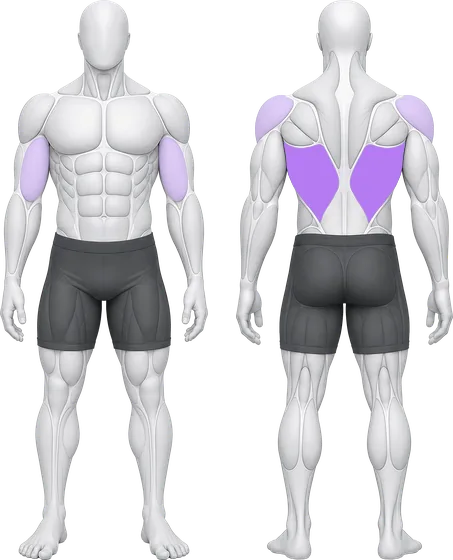
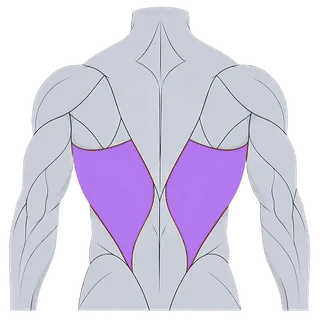
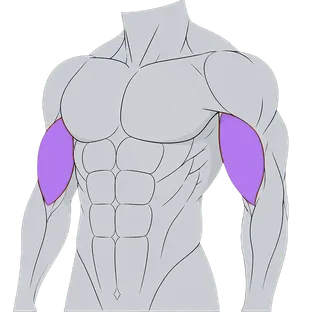
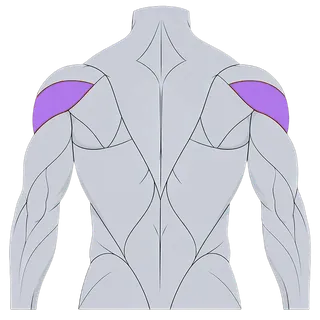
They mainly work the lats, with help from the biceps, the rear delts and the rhomboids.
Add pull-ups to your next workout
Log your sets and weights, and see how each muscle progresses in the app.