Dumbbell Row
A bent-over row with a dumbbell in each hand: more freedom of movement than a barbell and easy to do at home.
Also known as: bent-over dumbbell row, two-arm dumbbell row
- Level
- Intermediate
- Equipment
- Dumbbell
- Type
- Compound
How to do it
- Holding a dumbbell in each hand, soften your knees and hinge forward with a flat back.
- Let the dumbbells hang below your shoulders, palms facing each other.
- Row them toward your hips, driving your elbows back and close to your body.
- Squeeze your back at the top and lower slowly.
Form cues
- The dumbbells travel toward your hips, not your chest.
- Neck in line with your spine; look at the floor just ahead.
- If your lower back tires first, support your chest on a bench.
Common mistakes
- Standing up as you pull: you lose the angle and use momentum.
- Shrugging toward your ears: your traps steal the work.
- Short range: let the dumbbells hang to straight arms at the bottom.
Sets and reps
3-4 sets of 8-12 reps with 90 seconds of rest.
Variations
Same movement, different equipment. Pick based on what you have and what you want from the dumbbell row.
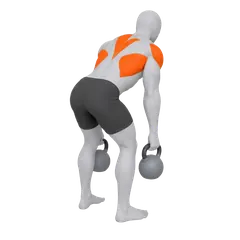
Double kettlebell row
The same row with kettlebells, which challenge your grip more.
How to do it
- Hold a kettlebell in each hand and hinge forward at the hips.
- Let your arms hang straight down from your shoulders.
- Row both kettlebells to your hips by driving elbows back.
- Squeeze your shoulder blades at the top.
- Lower under control and repeat.
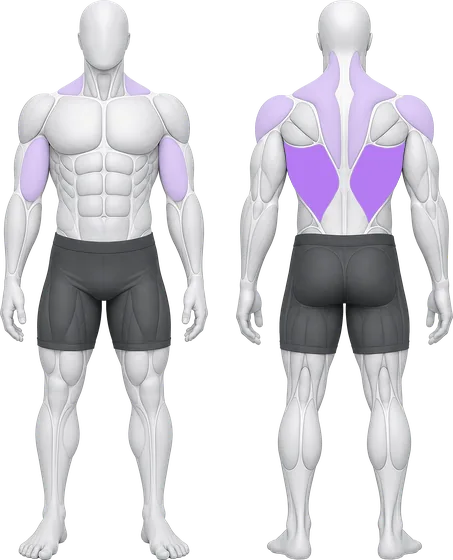
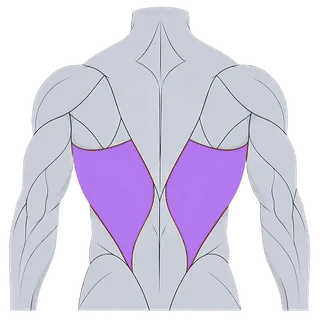
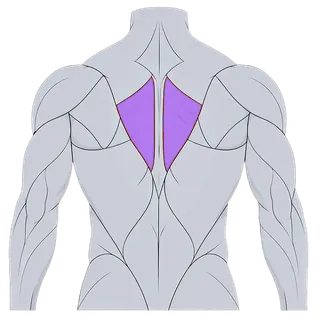
- Primary
- Lats, Rhomboids
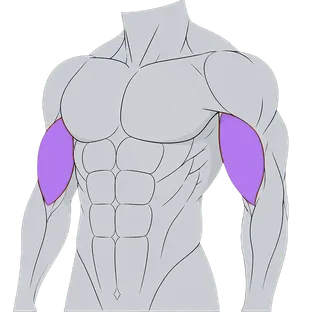
- Secondary
- Biceps, Lower Back, Traps
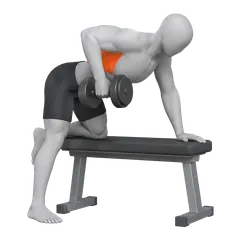
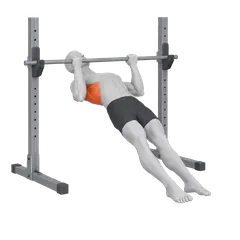
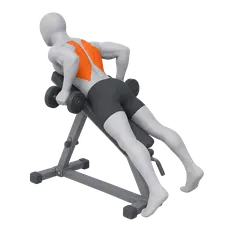
FAQ
Dumbbell or barbell row?
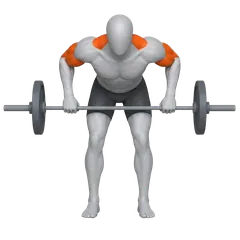
A barbell lets you lift more; dumbbells let each arm move freely and pull further back. Both build your back.
What if my lower back hurts?
Support your chest on an incline bench or do the single-arm row braced on a bench.
Palms facing in or back?
Facing in for more lats; facing back with elbows out for more upper back and rear delts.
What muscles do the dumbbell row work?
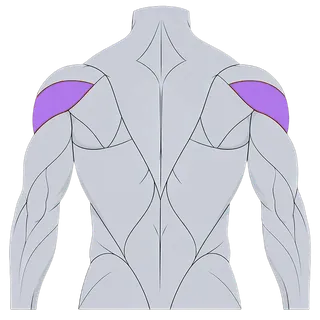
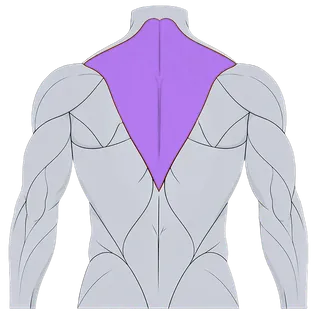
They mainly work the lats and the rhomboids, with help from the biceps, the rear delts and the traps.
Add the dumbbell row to your next workout
Log your sets and weights, and see how each muscle progresses in the app.