Chest-Supported Row
Lying face down on an incline bench, you row without your lower back holding you up, so all the effort goes to your upper back.
Also known as: incline dumbbell row, seal row
- Level
- Intermediate
- Equipment
- Dumbbell
- Type
- Compound
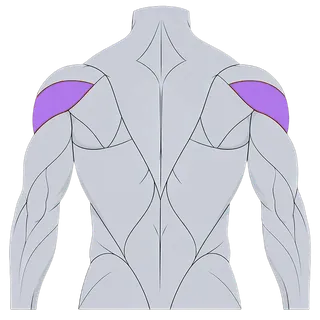
How to do it
- Set a bench to about 30-45 degrees and lie face down with your chest on the pad.
- Let a dumbbell hang in each hand with straight arms.
- Row your elbows back until the dumbbells reach your sides.
- Squeeze your shoulder blades for a second and lower slowly.
Form cues
- Your chest stays on the pad.
- Elbows out for upper back, close to your body for lats.
- Keep your chin neutral; don't crane your head up.
Common mistakes
- Lifting your chest off the pad to help: exactly what this exercise is meant to remove.
- Bench too upright: the row turns into a shrug.
- Short reps: straighten your arms at the bottom every time.
Sets and reps
3-4 sets of 8-15 reps with 90 seconds of rest. Ideal when you want back volume without fatiguing your lower back.
Variations
Same movement, different equipment. Pick based on what you have and what you want from the chest-supported row.
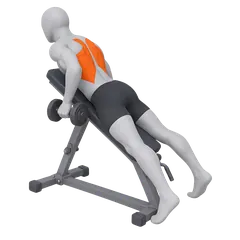
Single-arm chest-supported row
One side at a time to focus on each lat.
How to do it
- Lie face-down on an incline bench holding a dumbbell in one hand, arm hanging straight down.
- Row the dumbbell up to your side, driving your elbow past your torso.
- Squeeze your shoulder blade at the top, then lower under control.
- Complete all reps on one side before switching arms.
- Primary
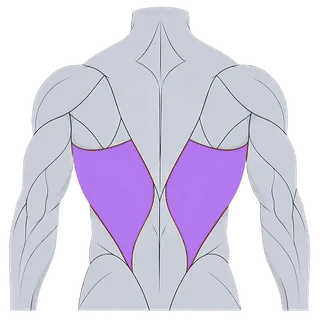
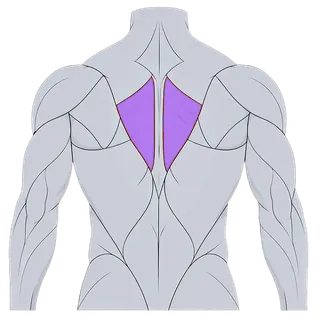
- Lats, Rhomboids
- Secondary
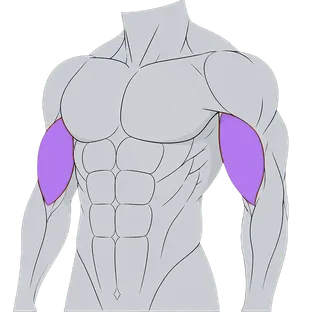
- Biceps, Rear Delts
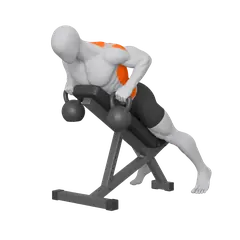
Chest-supported kettlebell row
The same row with kettlebells.
How to do it
- Lie face down on an incline bench, allowing your arms to hang freely with a kettlebell in each hand.
- Brace your core and retract your shoulder blades.
- Pull the kettlebells towards your hips, squeezing your shoulder blades together.
- Pause briefly at the top, feeling the contraction in your back.
- Slowly lower the kettlebells back to the starting position with control.
- Primary
- Lats, Rhomboids
- Secondary
- Biceps, Rear Delts, Traps
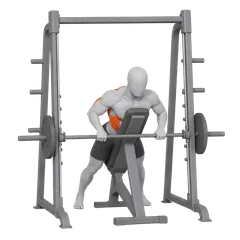
Chest-supported Smith machine row
A guided bar over the bench: very stable.
How to do it
- Set an incline bench inside the Smith machine facing the bar, and set the bar low enough that your arms hang straight when you lean on the pad.
- Stand astride the bench with your feet planted and your chest resting against the top of the pad.
- Take an overhand grip a little wider than shoulder-width and unhook the bar with your arms extended.
- Pull the bar up to your lower chest, leading with your elbows and squeezing the shoulder blades together at the top.
- Lower the bar under control until your arms are straight again, and repeat for the desired number of repetitions.
- Primary
- Lats, Rhomboids
- Secondary
- Biceps, Rear Delts
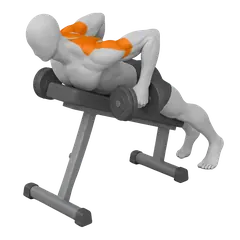
Dumbbell bench pull
Lying on a high flat bench: your torso is horizontal.
How to do it
- Lie face down on an incline bench holding dumbbells.
- Let your arms hang straight down.
- Pull the dumbbells up toward your chest, squeezing your shoulder blades.
- Lower with control.
- Primary
- Lats, Rhomboids
- Secondary
- Biceps, Rear Delts
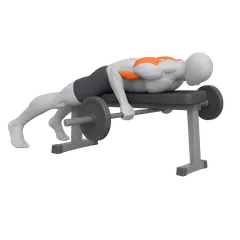
Barbell bench pull
The barbell version lying on a high bench.
How to do it
- Lie face down on an elevated bench with arms hanging straight down.
- Grip a barbell or dumbbells below you.
- Row the weight up to the underside of the bench.
- Squeeze your shoulder blades at the top.
- Lower under control and repeat.
- Primary
- Lats, Rhomboids
- Secondary
- Biceps, Rear Delts, Traps
FAQ
Why do a chest-supported row?
It removes momentum and lower-back load, so you can take your upper back close to failure without your form breaking down.
What bench angle should I use?
Between 30 and 45 degrees. Lower increases the range; higher shortens it.
Does it work lats or upper back?
Both. Elbows out works more upper back; elbows tucked works more lats.
What muscles do the chest-supported row work?
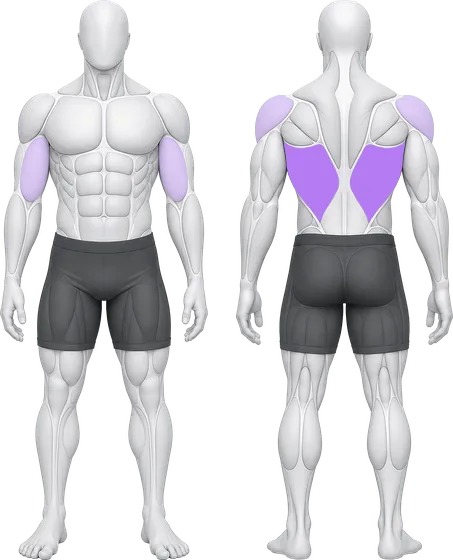
They mainly work the lats and the rhomboids, with help from the biceps and the rear delts.
Add the chest-supported row to your next workout
Log your sets and weights, and see how each muscle progresses in the app.