Inverted Row
A bodyweight row hanging under a bar: the best preparation for pull-ups and a great at-home back exercise.
Also known as: Australian pull-up, bodyweight row
- Level
- Intermediate
- Equipment
- Barbell
- Type
- Compound
How to do it
- Set a bar at waist height and hang underneath it with straight arms.
- Straighten your body into a line with your heels on the floor.
- Pull your chest to the bar, driving your elbows back.
- Lower slowly to straight arms.
Form cues
- The more horizontal your body, the harder it gets.
- Squeeze your glutes so your hips don't sag.
- Chest to the bar, not your chin.
Common mistakes
- Letting your hips sag: your body stops moving as one.
- Partial reps: touch the bar with your chest every rep.
- Poking your head forward: your neck should stay in line with your body.
Sets and reps
3-4 sets of 8-15 reps with 60-90 seconds of rest. To progress, lower the bar or elevate your feet.
Variations
Same movement, different equipment. Pick based on what you have and what you want from the inverted row.
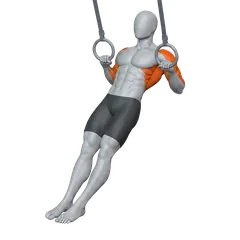
Ring row
More upright and easier; the rings let your wrists rotate.
How to do it
- Set the rings at hip to chest height.
- Grip the rings with palms facing each other, lean back at an angle with arms straight.
- Brace the core and pull the chest toward the rings.
- Squeeze the shoulder blades together at the top.
- Lower under control to a full-arm extension.
- Primary
- Lats, Rhomboids
- Secondary
- Biceps, Rear Delts, Traps
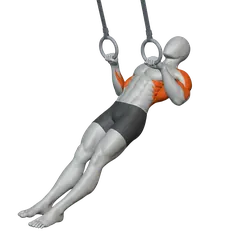
Ring inverted row
The demanding ring version with your body nearly parallel to the floor.
How to do it
- Set the rings just above hip height.
- Lie under the rings and grip them with palms facing each other.
- Walk the feet forward so the body forms a straight line.
- Pull the chest toward the rings, squeezing the shoulder blades.
- Lower under control to a full-arm extension.
- Primary
- Lats, Rhomboids, Traps
- Secondary
- Biceps, Forearm Flexors, Rear Delts, Abs
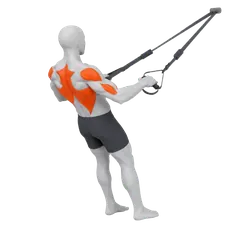
Suspension trainer row
Adjust the difficulty just by stepping forward or back.
How to do it
- Grasp the handles of a suspension trainer with an overhand grip, palms facing each other.
- Lean back, extending your arms fully, keeping your body straight from head to heels.
- Engage your core and pull your chest towards your hands, squeezing your shoulder blades together.
- Pause briefly at the top, then slowly lower yourself back to the starting position with control.
- Maintain a rigid body throughout the movement, avoiding any sagging in the hips.
- Primary
- Lats, Rhomboids
- Secondary
- Biceps, Rear Delts, Traps
FAQ
Does the inverted row help with pull-ups?
Yes, it strengthens your back and arms with an easier movement. It's one of the most common steps toward a first pull-up.
How do I make it harder?
Get more horizontal, raise your feet on a bench, pause at the top or wear a weight vest.
Can I do it at home?
Yes, under a sturdy table or with rings or a suspension trainer hung from a door or bar.
What muscles do the inverted row work?
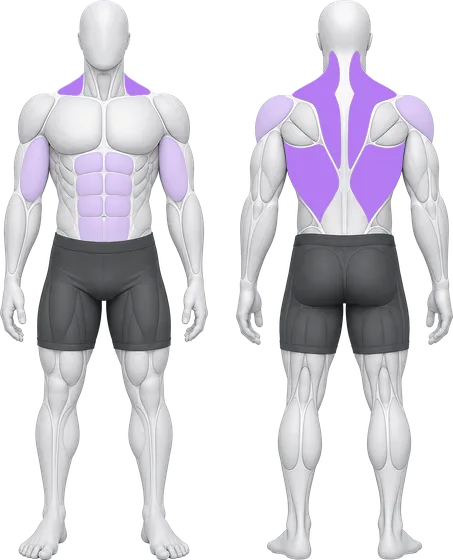
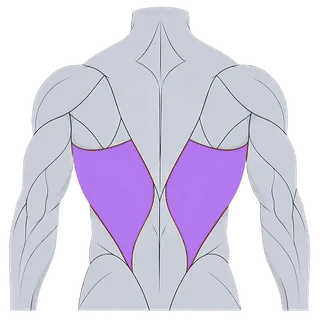
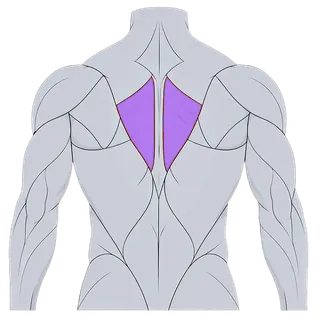
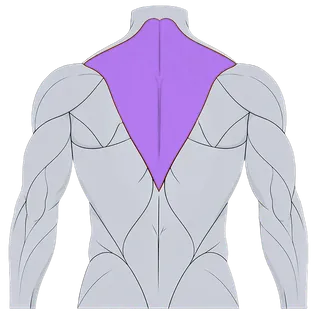
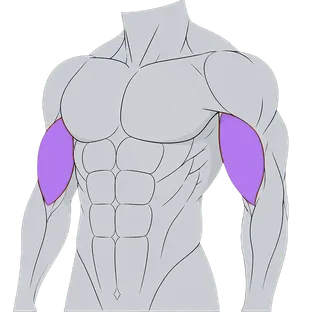
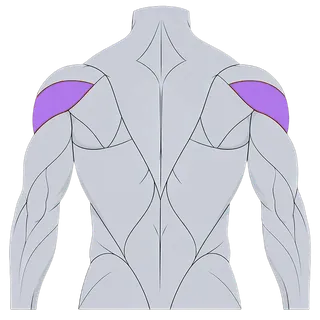
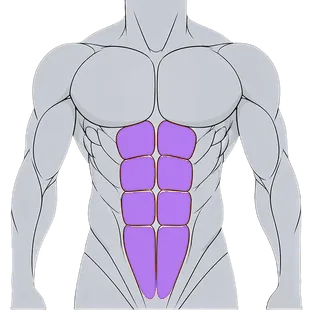
They mainly work the lats, the rhomboids and the traps, with help from the biceps, the rear delts and the abs.
Add the inverted row to your next workout
Log your sets and weights, and see how each muscle progresses in the app.