Spinal Twist
Rotating your torso while sitting tall: it mobilises your spine and eases stiffness from long hours sitting.
Also known as: seated twist, spinal twist stretch
- Level
- Beginner
- Equipment
- Bodyweight
- Type
- Compound
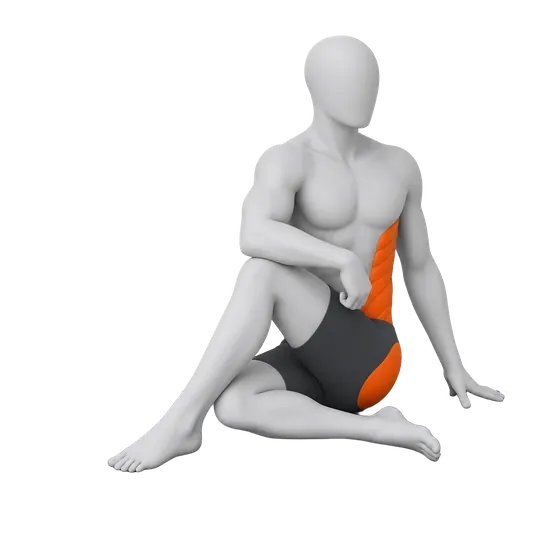
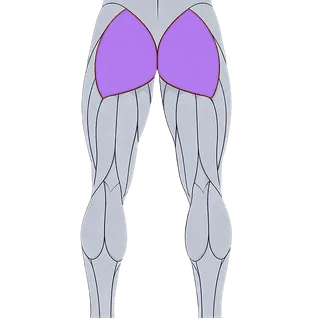
How to do it
- Sit with your legs straight and cross one foot over the opposite knee.
- Sit tall, lengthening your spine.
- Rotate toward the bent leg, placing your hand behind you.
- Use your opposite elbow against your knee to twist a little further, and breathe.
Form cues
- Lengthen as you breathe in, twist as you breathe out.
- The twist starts low and travels up your spine.
- Don't crank with your arm.
Common mistakes
- Slouching as you twist: sit tall.
- Forcing the twist with your neck: your neck follows your torso.
- Jerky movements: twist slowly.
Sets and reps
Hold each stretch for 30-60 seconds per side, 2-3 times, after training or in a mobility session.
Variations
Same movement, different equipment. Pick based on what you have and what you want from spinal twists.
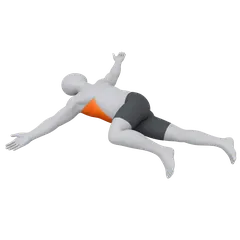
Supine twist
Lying down, let your knees fall to one side.
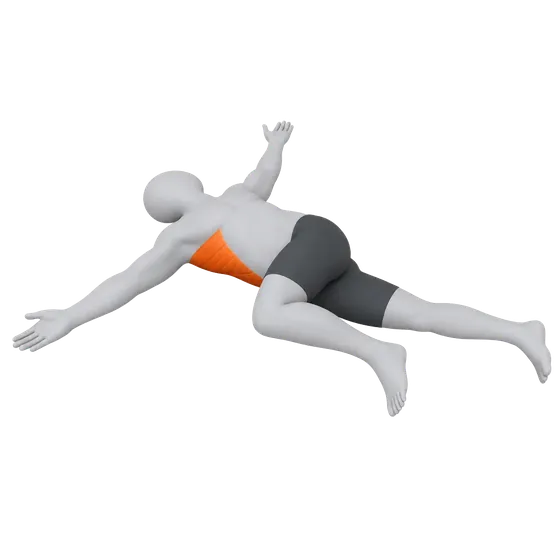
How to do it
- Lie on your back and bend one knee toward your chest.
- Guide that knee across your body toward the floor.
- Stretch your arms out wide and turn your head away.
- Hold for 20 to 30 seconds, breathing steadily.
- Switch sides and repeat.
- Primary
- Lower Back, Obliques
- Secondary
- Glutes
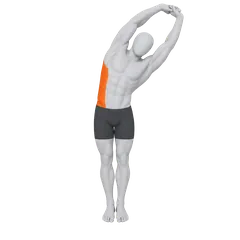
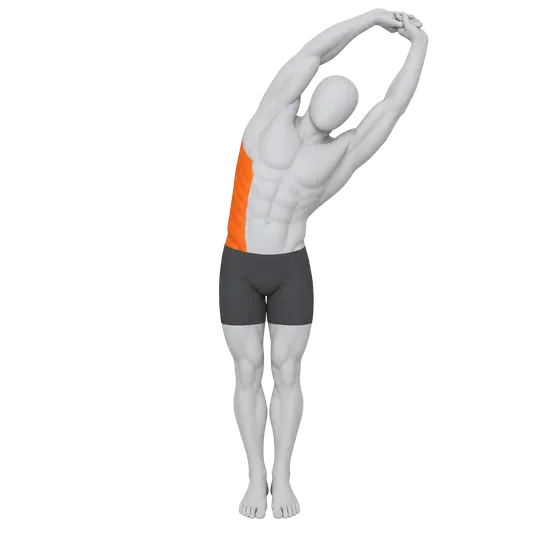
Standing side bend
Standing, lean to one side with your arm overhead.
How to do it
- Stand with feet hip-width and reach both arms overhead.
- Clasp your hands and lengthen up tall.
- Bend smoothly to one side in a long curve.
- Hold for 20 to 30 seconds, breathing steadily.
- Switch sides and repeat.
- Primary
- Obliques
- Secondary
- Lats, Quadratus Lumborum
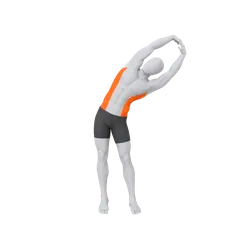
Side bend flow
Alternate side to side continuously.
How to do it
- Stand with the feet hip-width apart and reach both arms overhead.
- Bend the trunk to one side, keeping both feet planted and the hips level.
- Return through the centre with the ribs stacked over the pelvis.
- Bend to the other side in the same way.
- Keep alternating for the desired number of repetitions.
- Primary
- Obliques
- Secondary
- Lats, Quadratus Lumborum
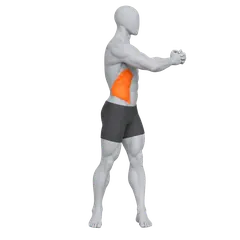
Torso twists
Dynamic standing twists to warm up.
How to do it
- Stand with the feet about shoulder-width apart and the knees softly bent.
- Brace lightly and hold the hands together in front of the chest.
- Rotate the rib cage to one side without shifting the feet.
- Return through centre and rotate to the other side.
- Continue alternating smoothly through a comfortable range.
- Primary
- Obliques, Deep Core
- Secondary
- Lower Back
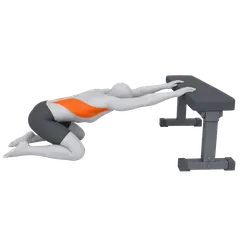
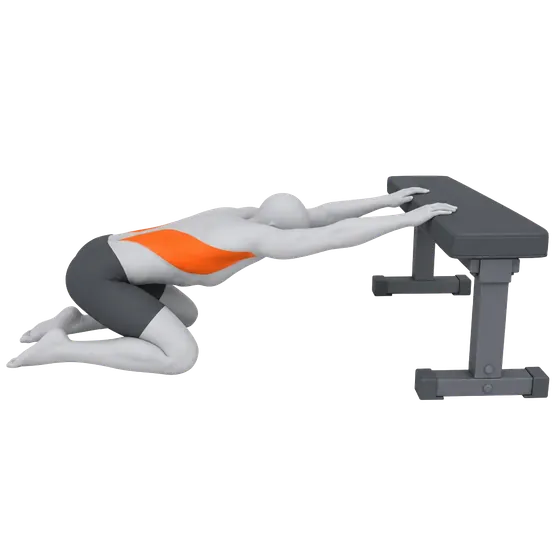
Bench lat stretch
Elbows on a bench, chest sinking: stretches your lats.
How to do it
- Kneel on the floor in front of a bench.
- Place both hands on top of the bench.
- Sit your hips back and let your chest sink down.
- Hold for 20 to 30 seconds, breathing steadily.
- Primary
- Lats
- Secondary
- Rear Delts
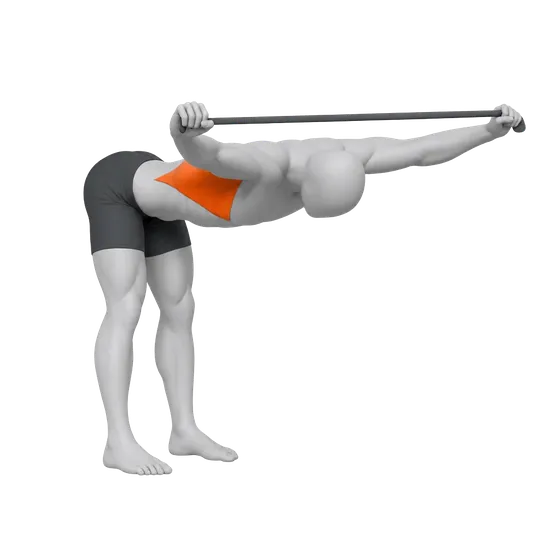
Banded lat stretch
A band pulls your arm to stretch the lat.
How to do it
- Hold a band overhead with both hands under light tension.
- Hinge forward at the hips with your arms reaching ahead.
- Let your chest sink to lengthen the sides of your back.
- Hold for 20 to 30 seconds, breathing steadily.
- Primary
- Lats
- Secondary
- Rear Delts
Banded IT band stretch
Lying down, cross your leg over with a band.
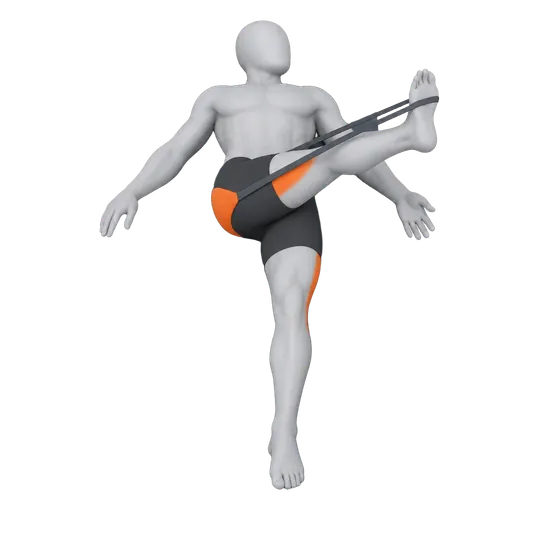
How to do it
- Lie on your back with a band around one raised foot.
- Hold the band with the opposite hand.
- Draw the straight leg across your body toward the floor.
- Hold for 20 to 30 seconds, breathing steadily.
- Switch sides and repeat.
- Primary
- Abductors
- Secondary
- Glutes, Glute Medius
FAQ
What is the spinal twist good for?
It improves spinal rotation and eases back stiffness.
Is it good with back pain?
Many people find gentle twisting soothing. With persistent pain, see a health professional.
Seated or lying down?
Lying down is more relaxing; seated gives you more control.
What muscles do spinal twists work?
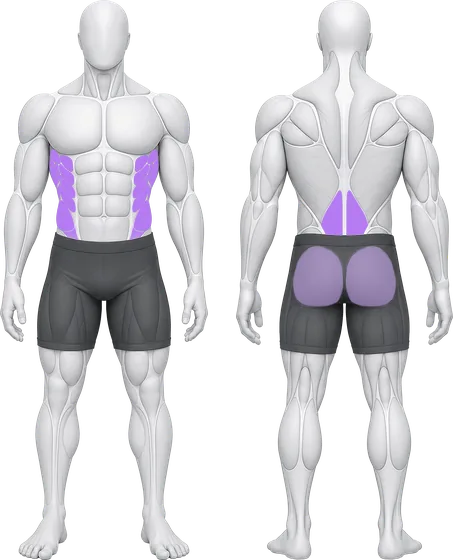
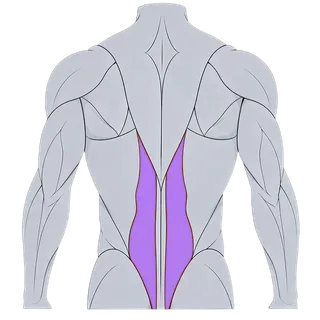
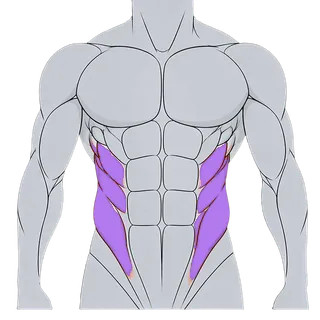
They mainly work the lower back and the obliques, with help from the glutes.
Add spinal twists to your next workout
Log your sets and weights, and see how each muscle progresses in the app.