Stationary Bike
Low-impact cardio that's easy on your joints: simple, adjustable and great for beginners and intervals alike.
Also known as: exercise bike, indoor cycling
- Level
- Beginner
- Equipment
- Stationary Bike
- Type
- Compound
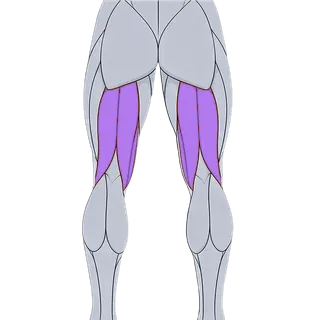
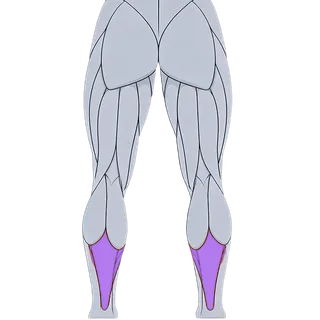
How to do it
- Set the seat so your knee is slightly bent with the pedal at the bottom.
- Set the handlebars at a comfortable height with a straight back.
- Pedal at a steady cadence, pushing through your whole foot.
- Adjust the resistance to suit the workout.
Form cues
- Knees in line with your feet.
- Relaxed shoulders.
- Cadence of 70-90 rpm.
Common mistakes
- Seat too low: it loads your knees.
- Bouncing in the saddle from too little resistance: add a bit more.
- Hunching your back: adjust the handlebars.
Sets and reps
For health, 20-45 minutes at a moderate pace 3-5 times a week. For intervals, 6-10 x 30 seconds hard with 90 seconds easy.
Variations
Same movement, different equipment. Pick based on what you have and what you want from the stationary bike.
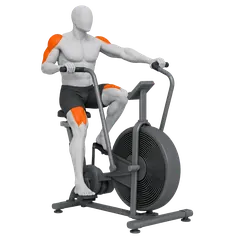
Air bike
Arms and legs together; the harder you pedal, the more resistance.
How to do it
- Sit on the air bike and grip the moving handles.
- Place your feet on the pedals and brace your core.
- Push and pull the handles while pedaling at a steady pace.
- Drive with both arms and legs to maintain power output.
- Continue for the desired duration or distance.
- Primary
- Hamstrings, Quads
- Secondary
- Glutes, Lats, Chest, Abs
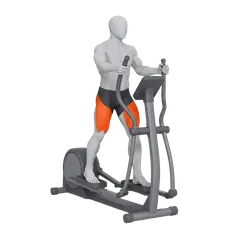
Elliptical
A running-like motion without impact, with arm handles.
How to do it
- Step onto the foot plates one at a time, holding the fixed centre post until you are steady, then take a moving handle in each hand.
- Start the pedals turning forward, keeping your whole foot down on the plate rather than lifting your heel.
- Push one handle away as the same-side foot travels forward, and pull the other back, so the arms and legs work in opposition.
- Stand tall with your hips over the pedals and your core braced instead of hanging back on the handles.
- Set the resistance and ramp so you can hold a smooth stride, and continue for the desired time or distance.
- Primary
- Glutes, Quads
- Secondary
- Calves, Hamstrings, Lats, Chest, Soleus, Triceps
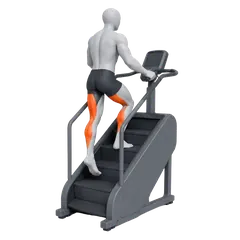
Stair climber
Endless stairs: lots of glutes and cardio.
How to do it
- Step onto the bottom stair with the machine at its slowest setting and take the rails lightly for balance.
- Climb one step at a time, placing the whole foot on each stair rather than just the toes.
- Stand upright with your chest open and your hips under your shoulders instead of hunching over the console.
- Push the step down through the heel of the front foot, letting the glute of that leg do the work.
- Set the pace so you can hold your posture, and keep climbing for the desired time or number of floors.
- Primary
- Glutes, Quads
- Secondary
- Calves, Glute Medius, Hamstrings, Soleus
FAQ
Does the stationary bike help you lose weight?
It helps you burn energy comfortably and sustainably. Combined with your diet, it's a useful tool.
How long per day?
20-45 minutes is a good guide for most people.
Is it good for your knees?
Yes, it's one of the lowest-impact cardio options, provided the seat is set correctly.
What muscles do the stationary bike work?
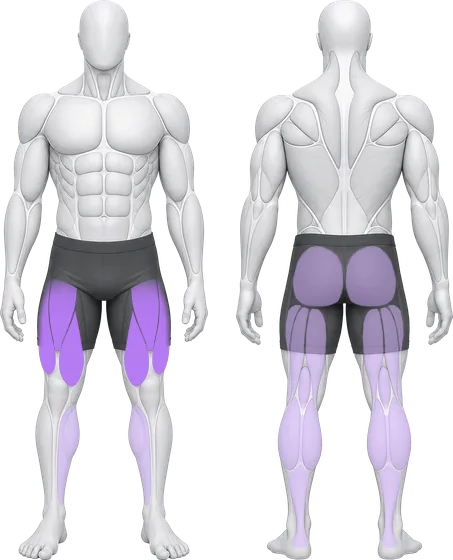
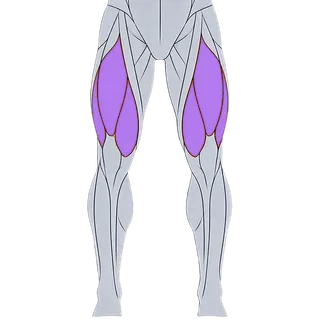
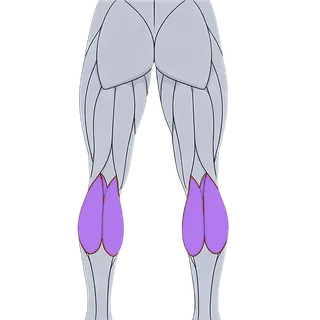
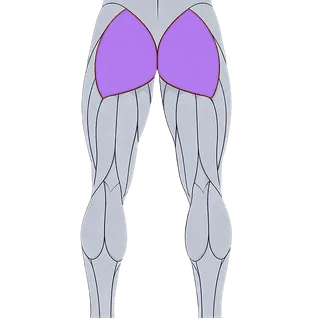
They mainly work the quads, with help from the calves, the glutes, the hamstrings and the soleus.
Add the stationary bike to your next workout
Log your sets and weights, and see how each muscle progresses in the app.