Upright Row
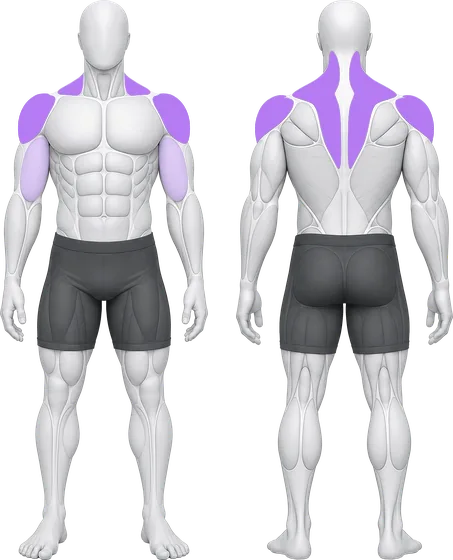
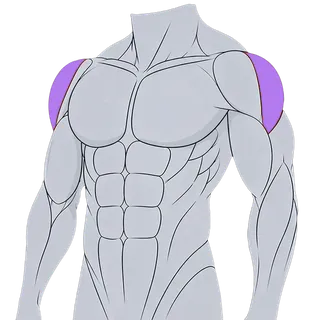
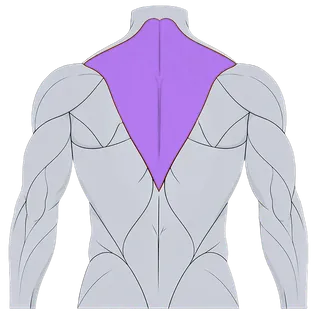
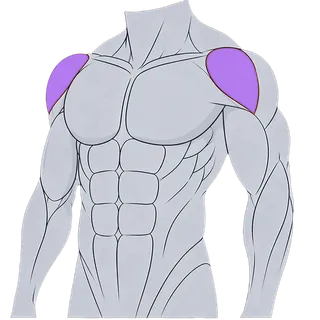
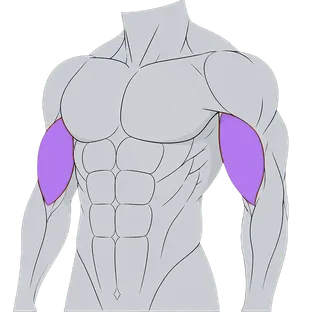
Pulling a bar up along your body to chest height: it trains side delts and traps in one movement.
Also known as: barbell upright row, standing upright row
- Level
- Intermediate
- Equipment
- Barbell
- Type
- Compound
How to do it
- Stand holding the bar in front of your thighs with an overhand grip slightly wider than your shoulders.
- Pull the bar up close to your body, leading with your elbows up and out.
- Stop when your elbows reach shoulder height.
- Lower slowly to straight arms.
Form cues
- Use a wider grip; a narrow one strains the shoulder.
- Keep your elbows above your hands.
- Don't raise your elbows above your shoulders.
Common mistakes
- A very narrow grip: it increases shoulder impingement. Widen your hands.
- Pulling to your chin: above shoulder height it gets uncomfortable.
- Swinging your body: your traps and lower back help too much.
Sets and reps
3 sets of 10-15 reps with 60-90 seconds of rest, using moderate weight.
Variations
Same movement, different equipment. Pick based on what you have and what you want from the upright row.
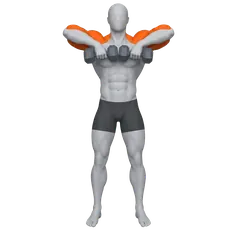
Dumbbell upright row
Each hand moves freely, which is easier on the shoulder.
How to do it
- Stand holding two dumbbells in front of your thighs, palms facing your body.
- Pull the dumbbells straight up along your body, leading with your elbows.
- Raise until the dumbbells reach chin height and elbows are above the wrists.
- Pause briefly, then lower with control.
- Primary
- Side Delts, Traps
- Secondary
- Front Delts, Biceps, Rhomboids
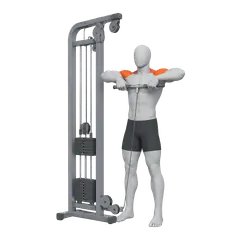
Cable upright row
Constant tension with a bar on the low pulley.
How to do it
- Stand in front of a cable machine and grip a straight bar or rope at thigh height.
- Pull the bar up toward your chin, leading with your elbows.
- Lower under control.
- Primary
- Side Delts, Traps
- Secondary
- Front Delts, Biceps
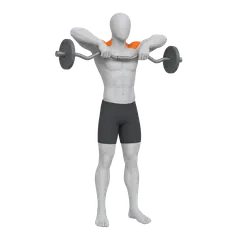
EZ-bar upright row
An angled grip for sensitive wrists.
How to do it
- Stand holding an EZ-bar with a shoulder-width grip on the angled portions.
- Pull the bar straight up along your body toward your chin.
- Lead with your elbows, keeping them above your hands.
- Lower with control.
- Primary
- Side Delts, Traps
- Secondary
- Front Delts, Biceps
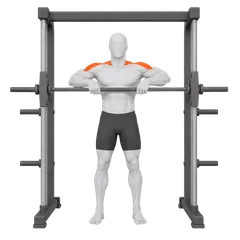
Smith machine upright row
A guided, stable bar.
How to do it
- Set the bar at hip height, take an overhand grip a little wider than shoulder-width and stand close to it with your arms straight.
- Unrack the bar and stand tall with your shoulders back and your core braced.
- Pull the bar straight up the front of your body, leading with your elbows and keeping the bar close.
- Stop when the bar reaches your lower chest and your elbows are level with your shoulders, then pause briefly.
- Lower the bar under control until your arms are straight again, and repeat for the desired reps.
- Primary
- Side Delts, Traps
- Secondary
- Front Delts, Biceps
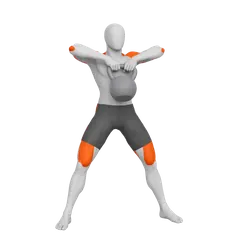
Kettlebell sumo high pull
From a sumo stance with hip drive: more explosive.
How to do it
- Stand with feet wider than shoulder-width, toes slightly turned out, a kettlebell on the floor between the feet.
- Hinge down and grip the handle with both hands.
- Drive through the feet and extend the hips explosively to pull the kettlebell up.
- As it rises, pull the elbows up and out until the handle reaches chin height.
- Lower the kettlebell back between the legs under control.
- Primary
- Adductors, Side Delts, Traps
- Secondary
- Glutes, Hamstrings, Rear Delts
FAQ
Is the upright row bad for your shoulders?
Not necessarily. With a wider grip and stopping at shoulder height, most people tolerate it well.
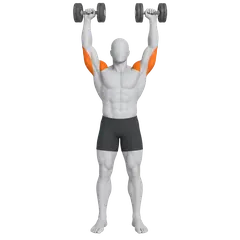
What muscles does it work?
Side delts and upper traps, with help from the biceps.
Is it better than lateral raises?
It allows more weight and adds traps; lateral raises isolate the delt better. They complement each other.
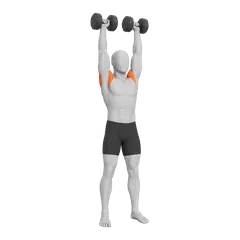
What muscles do the upright row work?
They mainly work the side delts and the traps, with help from the front delts and the biceps.
Add the upright row to your next workout
Log your sets and weights, and see how each muscle progresses in the app.